

Tokyo Nihonto
Antique Japanese Katana Sword by Ishido School - NBTHK Hozon
Antique Japanese Katana Sword by Ishido School - NBTHK Hozon
Verfügbarkeit für Abholungen konnte nicht geladen werden
Save 3% with bank transfer payment, no transaction fees. Contact us here.
USA SHIPPING ⚠️ From 9 oct. 2025
USA SHIPPING ⚠️ From 9 oct. 2025
Order, Japan Post (EMS) has temporarily suspended all commercial deliveries to the United States.
As a result, we are now shipping through alternative private carriers. Unfortunately, these services are considerably more expensive. Therefore, we kindly ask our U.S. customers to contribute a portion of the shipping cost — $200 per order.
Please note that delivery times will also be longer, as we must obtain a custom shipping quote from the carrier for each sword. We currently estimate a 3–4 month delivery window.
We sincerely appreciate your patience, understanding, and continued support during this time.
- Signature (Mei): 無銘(石堂) Mumei (Attributed to Ishidō)
- Swordsmith: Ishidō School
- School / Tradition: Bizen-den (Edo Ishidō lineage)
- Period / Province: Early Edo Period (Shinto) / Musashi Province (Edo)
- Certificate: NBTHK Hozon (保存刀剣)
- Mounting: High-quality Koshirae and Shirasaya
- Blade Length (Nagasa): 71.0 cm
- Curvature (Sori): 2.2 cm
- Mekugi-ana: 2
- Shape: Shinogi-zukuri with a deep, elegant curvature
- Jihada: Fine Itame-hada with Mokume-nagare
- Hamon: Vibrant Choji-midare with active Ashi and a bright Nioikuchi
This is a magnificent Katana certified NBTHK Hozon, attributed to the prestigious Ishidō school. Boasting a commanding 71.0 cm nagasa and an exceptionally deep 2.2 cm sori, this blade exhibits a graceful, tachi-like silhouette that was highly favored by high-ranking samurai during the early Edo period. The blade is mumei (unsigned), a common occurrence for high-quality blades that were shortened (o-suriage) or originally intended for high-status attribution.
The Ishidō smiths were renowned for their ability to revive the magnificent Bizen-den styles of the Kamakura period, particularly the flamboyant Ichimonji tradition. This blade showcases that mastery through a vivid and active hamon characterized by clove-shaped (choji) undulations and a clear, healthy steel texture (jihada).
Koshirae Details
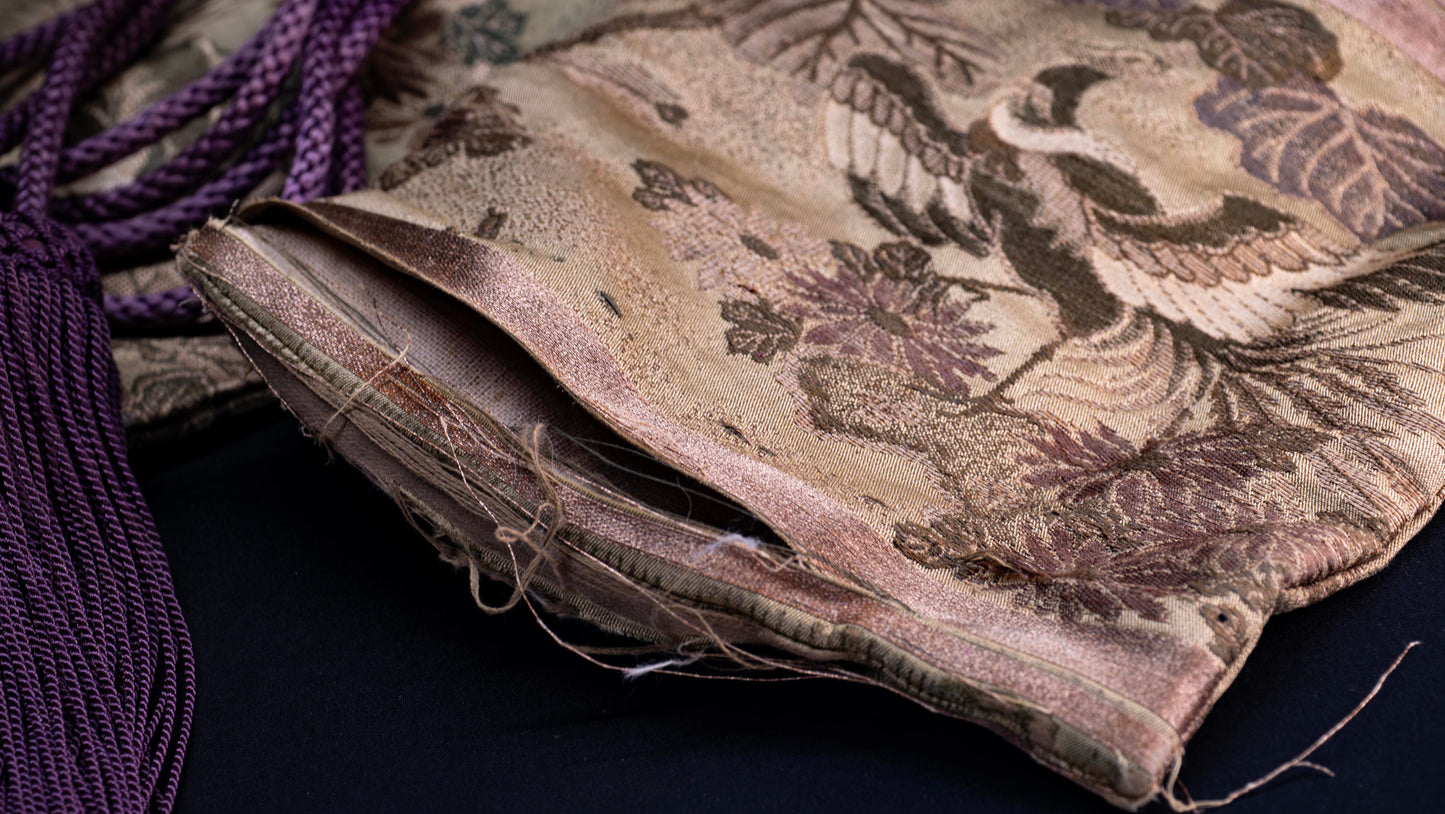
The sword is housed in a refined set of traditional mountings. The saya is finished in a classic kuroro (deep black polished lacquer), offering a timeless and dignified aesthetic. The tsuka (hilt) is wrapped in a distinctive deep-green silk ito over high-grade rayskin.
The tsuba is an iron sukashi (openwork) design featuring the Imperial Chrysanthemum (Kiku) and Paulownia (Kiri) motifs, symbols of authority and honor. The kashira is crafted from a rich copper-gold alloy (suaka or shakudo) featuring a high-relief depiction of autumn grain or millet stalks, symbolizing a bountiful harvest and prosperity.
Swordsmith Background
The Ishidō school originally hailed from Omi province but gained its greatest fame in Edo (modern-day Tokyo) during the 17th century. Known as the "Edo Ishidō" lineage, these smiths—including masters like Mitsuhira and Tsunemitsu—specialized in recreating the complex, flower-like choji-midare hamon of the ancient Bizen masters. Their work was so technically proficient that many Ishidō blades were historically mistaken for authentic Kamakura-era Ichimonji works.
School History
As leaders of the Bizen-den revival in the Shinto (New Sword) era, the Ishidō school represented the pinnacle of artistic sword making in the Shogun’s capital. Their blades are characterized by a combination of visual splendor and robust construction. With a 2.2 cm curvature, this particular piece stands out as an exceptionally elegant example of the school's output, offering the presence of a battlefield weapon with the refined finish of a piece of fine art.


Einklappbarer Inhalt
Zahlung
Sie können per Bankkarte oder Banküberweisung bezahlen. Wenn Sie per Banküberweisung bezahlen möchten, kontaktieren Sie uns bitte über das untenstehende Formular und geben Sie den Namen des Schwertes an, das Sie kaufen möchten.
Zölle und Steuern
Einfuhrabgaben, Steuern und Gebühren sind nicht im Artikelpreis oder in den Versandkosten enthalten. Diese Gebühren liegen in der Verantwortung des Käufers.
・Bitte erkundigen Sie sich bei der Zollbehörde Ihres Landes, um festzustellen, wie hoch diese zusätzlichen Kosten sind, bevor Sie bieten/kaufen.
・Diese Gebühren werden normalerweise von der ausliefernden Spedition oder bei Abholung des Artikels erhoben - verwechseln Sie sie nicht mit zusätzlichen Versandkosten.
Versand und Rückgabe
- Die Schwerter werden von Tokio, Japan aus verschickt. Wir verwalten alle Verfahren zum Export des Schwertes.
- Sie können das Schwert nicht nach Japan zurückbringen, weil die Verfahren zu streng sind.
- Wir arbeiten mit einer Spedition zusammen, die Erfahrung mit Nihonto hat, so dass Sie sich keine Sorgen machen müssen.
- Bitte überprüfen Sie die Regeln Ihres Landes, bevor Sie das Schwert importieren. Wir übernehmen keine Verantwortung, einschließlich (nicht beschränkt auf) Erstattung, aufgrund der oben genannten Gründe.
Exportverfahren (Wir verwalten es)
Alle unsere Schwerter sind in der Agentur für kulturelle Angelegenheiten als Kunstwerk und das Board of Education (Ausschuss für den Schutz von Kulturgütern) registriert; daher hat jedes Schwert die Registrierungskarte, die vom Board of Education ausgestellt wird.
・Nach Erhalt der vollständigen Zahlung der Artikel, senden wir die Registrierungskarte zurück und erhalten die Erlaubnis vom Ministerium für kulturelle Angelegenheiten, um die Schwerter legal aus Japan zu exportieren. Es wird etwa 20 Werktage dauern, um dieses Verfahren zu tun.
・Nach dem Erhalt der Erlaubnis, werden wir Sie per E-Mail informieren und senden Sie die Artikel sofort.