


Tokyo Nihonto
Antique Japanese Katana Sword signed Ienaga Saku - NBTHK Hozon
Antique Japanese Katana Sword signed Ienaga Saku - NBTHK Hozon
Impossibile caricare la disponibilità di ritiro
Save 3% with bank transfer payment, no transaction fees. Contact us here.
USA SHIPPING ⚠️ From 9 oct. 2025
USA SHIPPING ⚠️ From 9 oct. 2025
Order, Japan Post (EMS) has temporarily suspended all commercial deliveries to the United States.
As a result, we are now shipping through alternative private carriers. Unfortunately, these services are considerably more expensive. Therefore, we kindly ask our U.S. customers to contribute a portion of the shipping cost — $200 per order.
Please note that delivery times will also be longer, as we must obtain a custom shipping quote from the carrier for each sword. We currently estimate a 3–4 month delivery window.
We sincerely appreciate your patience, understanding, and continued support during this time.
- Signature (Mei): 家長作(加州) Ienaga saku (Kashū)
- Swordsmith: Ienaga (Fujishima School)
- School / Tradition: Kashū / Fujishima lineage
- Period / Province: Early Edo period / Kaga Province
- Certificate: NBTHK Hozon (保存刀剣)
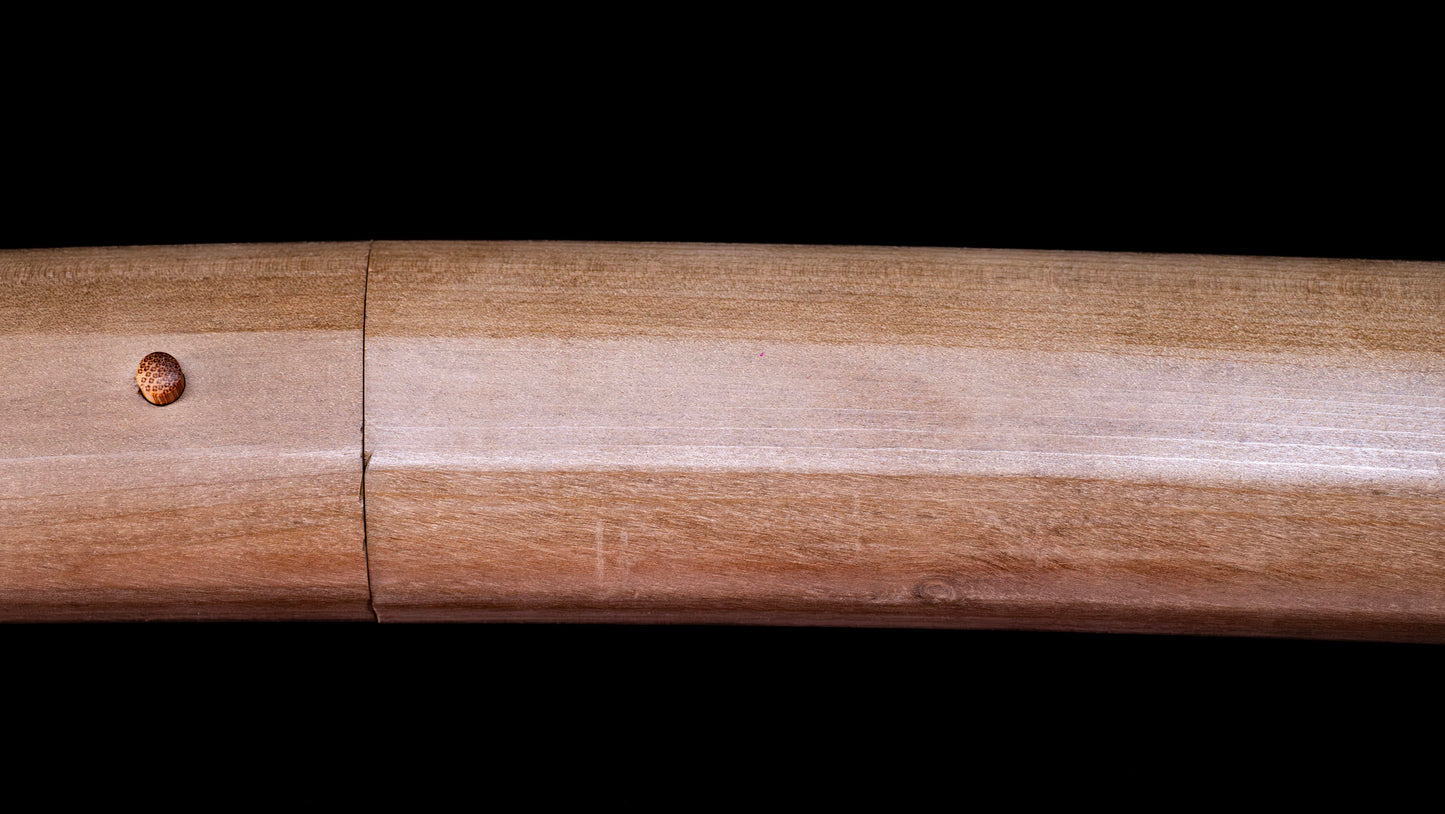
- Mounting: Period-correct Koshirae and Shirasaya
- Blade Length (Nagasa): 61.1 cm
- Curvature (Sori): 1.4 cm
- Mekugi-ana: 2
- Shape: Shinogi-zukuri
- Jihada: Well-forged Itame with areas of Masame-nagare
- Hamon: Active Gunome-midare with bright Nioikuchi
A refined Katana certified NBTHK Hozon and attributed to the swordsmith Ienaga of Kashū (Kaga Province). This blade measures 61.1 cm in nagasa with a graceful 1.4 cm sori, presenting a balanced and classic shinogi-zukuri silhouette. The tang (nakago) is zaimei (signed), bearing the clear engraving "Ienaga saku," which has been authenticated by the Society for Preservation of Japanese Art Swords.
The workmanship reflects the transition from the late Muromachi into the early Edo period, showcasing a vivid hamon of irregular gunome. The steel surface displays a tight itame grain that is characteristic of the Fujishima school's output in the Kaga region, known for its resilience and functional beauty.
Koshirae Details
This sword is accompanied by a beautiful and period-appropriate koshirae. The saya is finished in a striking deep-red textured lacquer, providing a sophisticated contrast to the dark tsuka-ito. The tsuba is an iron work featuring intricate gold nunome-zogan (overlay) depicting chrysanthemums, a symbol of longevity and nobility. The overall mounting is well-preserved, reflecting the high status and care this blade has received over the centuries.
Swordsmith Background
Ienaga was a skilled smith within the Fujishima school, which originally migrated from Yamashiro to Kaga province. The Kashū smiths were highly regarded for their practical cutting ability and were the primary sword makers for the Maeda clan, one of the most powerful daimyo families in Japan. The work of Ienaga is celebrated for maintaining the traditional aesthetics of the Fujishima line while adapting to the sturdier shapes required during the turbulent transition into the Edo period.
School History
The Kashū (Kaga) school is one of the most significant regional traditions outside of the primary "Gokaden" (Five Traditions). It is characterized by a "whitish" steel (shirake-utsuri) and a blend of Sōshū and Mino styles. As a zaimei (signed) work, this blade serves as a definitive example of the Fujishima lineage's artistry in the Hokuriku region, combining a robust field-ready character with the elegance demanded by the samurai elite.


Contenuto comprimibile
Pagamento
Puoi pagare con carta di credito o bonifico bancario. Se desideri utilizzare il bonifico bancario, contattaci utilizzando il modulo sottostante con il nome della spada che intendi acquistare.
Dogane e tasse
・I dazi doganali, le tasse e le spese non sono inclusi nel prezzo dell'articolo o nelle spese di spedizione. Queste spese sono a carico dell'acquirente.
・Si prega di verificare con l'ufficio doganale del proprio paese per determinare quali saranno questi costi aggiuntivi prima dell'offerta/acquisto.
・Queste spese vengono normalmente riscosse dalla società di spedizione (spedizione) o al momento del ritiro dell'articolo: non confonderle con spese di spedizione aggiuntive.
Spedizione e Reso
- Le spade vengono spedite da Tokyo, in Giappone . Gestiamo tutte le procedure per esportare la spada.
- Non puoi restituire la spada al Giappone perché le procedure sono troppo rigide.
- Lavoriamo con una compagnia di spedizioni che ha esperienza con Nihonto, quindi non devi preoccuparti.
- Si prega di controllare le regole del proprio paese prima di importare la spada. Non ci assumiamo alcuna responsabilità, incluso (non limitato a) il rimborso, a causa dei motivi di cui sopra.
Procedura di esportazione (la gestiamo noi)
・Tutte le nostre spade sono registrate presso l'Agenzia per gli affari culturali come opere d'arte e The Board of Education (Comitato per la protezione dei beni culturali); pertanto ogni spada ha la scheda di registrazione, rilasciata dal Board of Education.
・ Dopo aver ricevuto il pagamento completo degli articoli, restituiamo la scheda di registrazione e otteniamo il permesso dal Ministero degli Affari Culturali per esportare legalmente le spade dal Giappone. Ci vorranno circa 20 giorni lavorativi per eseguire questa procedura.
・ Dopo aver ricevuto l'autorizzazione, ti informeremo via e-mail e invieremo immediatamente gli articoli.