


Tokyo Nihonto
Antique Japanese Katana Sword signed Hiromasa - Showa Era - Gold Makie Nagoya Koshirae
Antique Japanese Katana Sword signed Hiromasa - Showa Era - Gold Makie Nagoya Koshirae
Couldn't load pickup availability
- Signature (Mei): 豫州北条住博正作 Yoshū Hōjō-jū Hiromasa saku — "Made by Hiromasa, residing in Hōjō, Iyo Province"
- Swordsmith: Hiromasa (博正) — birth name Toriū Kamesabu (鳥生亀松); pupil of Takahashi Yoshimune; Imperial Army commissioned swordsmith
- School / Tradition: Bizen-den — chōji-midare / Ichimonji-utsushi tradition
- Period: Shōwa Era / Hōjō-chō, Onsen-gun, Iyo Province (Ehime Prefecture)
- Awards: Prime Minister's Award (Sōri Daijin-shō) and multiple other prizes
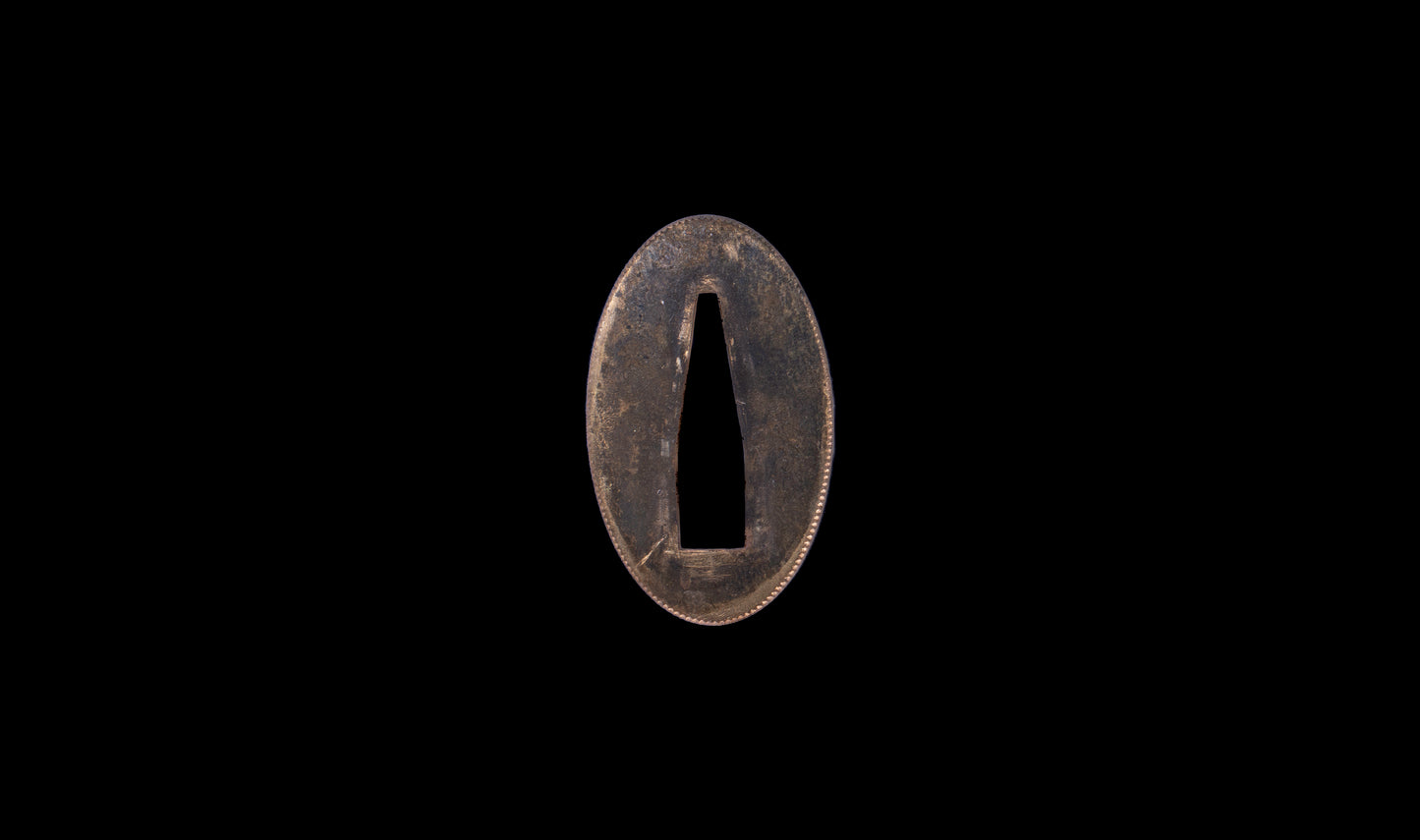
- Mounting: High-grade nagoya-goshirae — gold hiramaki-e black lacquer saya; dragon-motif shakudō fuchi-kashira with gilt; dragon menuki with gilt; geometric sukashi marugata iron tsuba; silver niju habaki; shirasaya included
- Blade Length (Nagasa): 63.5 cm (2 shaku 1 sun weak)
- Curvature (Sori): 1.5 cm
- Mekugi-ana: 1
- Shape: Shinogi-zukuri, ko-kissaki
- Motohaba: 3.01 cm / Sakihaba: 2.03 cm
- Motokasane: 5.88 mm / Sakikasane: 4.60 mm
- Blade Weight (naked): 572 g / Total koshirae length: 101.8 cm
- Hamon: Ko-notare with gunome elements, active nie along the habuchi
- Boshi: Ko-maru with composed turnback into a compact ko-kissaki
- Condition: Polished approximately 60 years ago; minor surface wear; overall relatively sound. Accompanied by silver habaki and shirasaya.
This distinguished Katana is a signed work by Hiromasa (博正) of Hōjō in Iyo Province — one of the most talented and tragically short-lived swordsmiths of the Shōwa era, whose expertise in the Bizen tradition and relatively small surviving output lend each of his blades exceptional rarity and collector significance. Measuring 63.5 cm with a refined 1.5 cm sori, the blade presents a well-proportioned shinogi-zukuri form with a composed ko-kissaki of classical purity. The relatively broad motohaba of 3.01 cm tapers with elegant authority to a sakihaba of 2.03 cm, the geometry throughout informed by Hiromasa's deep engagement with the great Bizen masterworks of the Kamakura period that defined his artistic vision.
The hamon is accomplished and confident — a gently undulating ko-notare with integrated gunome elements moving along the habuchi with rhythmic evenness, the boundary line animated by fine nie that catch the light in shifting constellations. The dark, well-forged ji provides an ideal ground, its close grain consistent along the entire length of the blade. The kissaki is compact and precisely formed — a neat ko-kissaki with a clean fukura — the boshi turning back in a composed ko-maru that speaks to the controlled, scholarly hand at work throughout this blade.
The single mekugi-ana and the clear diagonal yasurime on the well-preserved nakago are consistent with Hiromasa's documented works. The signature 豫州北条住博正作 is carved with confident, legible strokes — the inscription of a craftsman proud of his province, his teacher, and his name. A silver habaki of high quality accompanies the blade, along with a shirasaya for correct long-term storage.
Koshirae Details: Nagoya-Goshirae
The koshirae accompanying this blade belongs to the distinguished nagoya-goshirae (名古拵え) tradition — the prestigious mounting style associated with the highest level of samurai presentation, recorded in the original documentation as kōkyū nagoya-goshirae sakaeru deki migoto (高級名古拵え栄える出来見事): "a splendid example of high-grade Nagoya-style mounting in full flower," from the collection of a distinguished family (meika). Every component has been selected and executed to honor a blade of recognized merit.
The saya commands immediate attention. Lacquered in deep, lustrous black urushi, its surface is adorned with gold hiramaki-e — the celebrated technique in which powdered gold is worked into layers of wet lacquer to create decorative forms that seem to glow from within the surface itself. Scattered gold blossom clusters — each composed of overlapping petals of varying scale — float against the midnight-black ground with a warmth that shifts as the lacquer catches the light. This is lacquerwork conceived as an independent artistic statement, entirely consistent with the finest Edo-period makie production.
The tsuba is a work of bold geometric iron sukashi in the marugata (round) form. A central diamond connects via four radiating arms to four large oval apertures arranged symmetrically around the perimeter, creating a wheel-like composition of striking graphic power. The smooth, deeply patinated iron surface and the precision of the openwork speak to a specialist tsubashi at the height of their craft — a design simultaneously rooted in classical form and strikingly modern in its compositional confidence.
The fuchi-kashira set presents a vigorous dragon in roiling clouds (ryū-zu) motif in dark shakudō with silver and gilt. The kashira dragon is deeply carved in bold relief — scales, claws, and fierce expression worked with the confident chisel of a skilled kinko artisan, cloud forms sweeping dynamically around the figure. The fuchi continues the program with scrolling elements and gold punctuation. The menuki sustain the dragon iconography in paired shakudō and gilt figures. The tsuka-ito is wrapped in aged amber-gold silk over white same (ray skin) in the classic hishi-maki braid — its warm honey tone creating a sophisticated chromatic dialogue with the dark fittings and the brilliant gold of the saya lacquer.
Swordsmith Biography: Toriū Kamesabu / Hiromasa
Hiromasa (博正), whose full given name was Toriū Kamesabu (鳥生亀松), was born and resided in Hōjō-chō, Onsen-gun, Iyo Province — present-day Ehime Prefecture on the island of Shikoku. He trained under Takahashi Yoshimune, acquiring through that distinguished lineage a mastery of Bizen-den that would define his entire career and reputation. His specialty within that tradition was the chōji-midare hamon — the exuberant, clove-pattern tempering most closely associated with the great Ichimonji school of the Kamakura period — and his Ichimonji-utsushi works earned him recognition as one of the leading masters of the Shōwa era in that demanding genre.
Appointed as an Imperial Army commissioned swordsmith (gen rikugun jusei tōkō), Hiromasa distinguished himself even within that select group as a craftsman of exceptional technical ability — his swords noted particularly for their suitability for tameshigiri (test cutting), a mark of practical as well as aesthetic excellence. He was the recipient of the Prime Minister's Award (Sōri Daijin-shō) and numerous other prizes, and was regarded widely as one of the most promising figures of his generation.
In Shōwa 28 (1953), Toriū Kamesabu died at the age of forty-five. His early death left his body of work comparatively small — a circumstance that today lends each surviving signed blade exceptional rarity. He was, as contemporaries noted, a swordsmith from whom great things were expected; what he left behind is more than sufficient to confirm that expectation was fully justified.
Historical Context: Bizen-den and the Ichimonji Tradition
The Ichimonji school of Bizen Province, active principally during the Kamakura period (1185–1333), produced what many connoisseurs regard as the most beautiful hamon in the entire history of Japanese swordsmanship. Their characteristic chōji-midare — exuberant clove-shaped lobes rising in profusion from the yakigashira, suffused with nioi and animated by ashi and sunagashi — represents the supreme expression of Bizen-den differential hardening. The finest Ichimonji works, held today as National Treasures and Important Cultural Properties, have served as the ultimate benchmark for Bizen-tradition smiths across all subsequent centuries.
The Ichimonji-utsushi — faithful evocation of these great originals — is among the most demanding challenges in Japanese sword-making. Recreating the organic exuberance of genuine Kamakura chōji requires not merely technical skill but a deep intuitive understanding of the original aesthetic. Smiths who achieved genuine success in this genre are few across the entire history of Japanese sword-making, and Hiromasa's recognition as one of the Shōwa era's pre-eminent practitioners places him in exceptional company. To acquire a documented Hiromasa is to acquire a piece of one of the Shōwa era's most poignant interrupted legacies — the work of a master at or near his creative peak, fixed in time by a fate the Japanese sword world has never ceased to mourn.


Collapsible content
Payment
You can pay by Bank card or Bank transfer. If you wish to use bank transfer please contact us using the form bellow with the name of the sword you are willing to buy.
Customs and Taxes
・Import duties, taxes and charges are not included in the item price or shipping charges. These charges are the buyer’s responsibility.
・Please check with your country’s customs office to determine what these additional costs will be prior to bidding/buying.
・These charges are normally collected by the delivering freight (shipping) company or when you pick the item up - do not confuse them for additional shipping charges.
Shipping and Return
- Swords are shipped from Tokyo, Japan. We manage all the procedures to export the sword.
- You can't return sword to Japan because procedures are too strict.
- We work with a shipping company that have experience with Nihonto so you don't have to worry.
- Please check the rules of your country before importing the sword. We do not take any responsibility, including (not limited to) refund, due to the above reasons.
- We can NOT cancel an order once, we already applied for the export authorization. As this document is made to customer name.
We have shipped authentic Japanese swords to the USA, UK, Canada, Mexico, Germany, France, Hong Kong, and Australia. If you don’t live in these countries and like to order, please contact us first before purchasing. We normally ship by EMS (Express Mail Service) provided by Japan Post.
If you live in the UK, please contact us BEFORE order.
Export Procedure (We manage it)
・All our swords are registered in the Agency for Cultural Affairs as artwork and The Board of Education(Cultural properties protection Committee); therefore each sword has the registration card, issued by the Board of Education.
・After receiving the full payment of the items,we return the registration card and get the permission from Ministry of Cultural Affairs to export the swords legally from Japan. It will take about 1 to 3 months for that step.
・After the receiving the permission, we will inform you by email and send the items immediately.
Contact form
What Our Collectors Say
Independent reviews from verified buyers on Trustpilot
Wonderful folks to buy from
“Large selection to choose from. The katana were signed with Hozon and the blades in a shirasaya. My two katana and Kozuka came packed in a solid wooden crate. Great friendly communication.”
Got a beautiful sword delivered to NYC
“Condition is just as pictured. Took a little while to get all the way to the states, but I was very happy with this seller and plan to purchase more from them.”
Order with confidence
“In the end I received what I ordered, well-packaged and in the condition specified.”
Un katana antique magnifique
“J'ai posé beaucoup de questions au support qui a su répondre et m'aider dans mon choix. La commande est arrivée avec le certificat dans un emballage robuste et en parfait état, il est vraiment magnifique !”