


Tokyo Nihonto
Antikes japanisches Katana-Schwert signiert Hiromasa - Showa-Ära - Gold Makie Nagoya Koshirae
Antikes japanisches Katana-Schwert signiert Hiromasa - Showa-Ära - Gold Makie Nagoya Koshirae
Verfügbarkeit für Abholungen konnte nicht geladen werden
- Signatur (Mei): 豫州北条住博正作 Yoshū Hōjō-jū Hiromasa saku — "Hergestellt von Hiromasa, wohnhaft in Hōjō, Provinz Iyo"
- Schwertschmied: Hiromasa (博正) — Geburtsname Toriū Kamesabu (鳥生亀松); Schüler von Takahashi Yoshimune; vom Kaiserlichen Heer beauftragter Schwertschmied
- Schule / Tradition: Bizen-den — chōji-midare / Ichimonji-utsushi Tradition
- Periode: Shōwa-Ära / Hōjō-chō, Onsen-gun, Provinz Iyo (Präfektur Ehime)
- Auszeichnungen: Preis des Premierministers (Sōri Daijin-shō) und mehrere weitere Preise
- Montierung: Hochwertige nagoya-goshirae — gold hiramaki-e schwarze Lacksaya; Drachen-Motiv shakudō fuchi-kashira mit Vergoldung; vergoldete Drachen-menuki; geometrische sukashi marugata Eisentsuba; silberner niju habaki; shirasaya im Lieferumfang enthalten
- Klingenlänge (Nagasa): 63,5 cm (2 shaku 1 sun schwach)
- Krümmung (Sori): 1,5 cm
- Mekugi-ana: 1
- Form: Shinogi-zukuri, ko-kissaki
- Motohaba: 3,01 cm / Sakihaba: 2,03 cm
- Motokasane: 5,88 mm / Sakikasane: 4,60 mm
- Klingengewicht (blank): 572 g / Gesamtlänge koshirae: 101,8 cm
- Hamon: Ko-notare mit gunome-Elementen, aktive nie entlang der habuchi
- Boshi: Ko-maru mit komponierter Rückkehr in einen kompakten ko-kissaki
- Zustand: Vor etwa 60 Jahren poliert; geringfügige Oberflächenabnutzung; insgesamt relativ solide. Mit silbernem habaki und shirasaya ausgestattet.
Dieses ausgezeichnete Katana ist ein signiertes Werk von Hiromasa (博正) aus Hōjō in der Provinz Iyo — einer der talentiertesten und tragischerweise kurzlebigsten Schwertkünstler der Shōwa-Ära, dessen Expertise in der Bizen-Tradition und relativ kleine erhaltene Ausbeute jeder seiner Klingen außergewöhnliche Seltenheit und Bedeutung für Sammler verleiht. Mit einer Länge von 63,5 cm und einem verfeinerten 1,5 cm sori präsentiert die Klinge eine wohlproportionierte shinogi-zukuri Form mit einem komponierten ko-kissaki von klassischer Reinheit. Die relativ breite motohaba von 3,01 cm verjüngt sich mit eleganter Autorität zu einer sakihaba von 2,03 cm, wobei die Geometrie überall von Hiromasas tiefem Engagement mit den großen Bizen-Meisterwerken der Kamakura-Periode geprägt ist, die seine künstlerische Vision definierten.
Der hamon ist gelungen und selbstbewusst — ein sanft undulierender ko-notare mit integrierten gunome Elementen, die sich rhythmisch gleichmäßig entlang der habuchi bewegen, wobei die Grenzlinie durch feines nie belebt wird, das Licht in wechselnden Konstellationen einfängt. Das dunkle, gut geschmiedete ji bietet einen idealen Untergrund, dessen enge Körnung durchgehend konsistent ist. Der kissaki ist kompakt und präzise geformt — ein ordentlicher ko-kissaki mit sauberer fukura — der boshi kehrt in einem komponierten ko-maru zurück, der von der kontrollierten, gelehrten Hand spricht, die durchgehend an dieser Klinge wirkt.
Die einzelne mekugi-ana und die klare diagonale yasurime auf dem gut erhaltenen nakago entsprechen Hiromasas dokumentierten Werken. Die Signatur 豫州北条住博正作 ist mit selbstbewussten, lesbaren Strichen eingraviert — die Inschrift eines Handwerkers, der stolz auf seine Provinz, seinen Lehrer und seinen Namen ist. Ein hochqualitativer silberner habaki begleitet die Klinge, zusammen mit einer shirasaya zur ordnungsgemäßen Langzeitlagerung.
Koshirae Details: Nagoya-Goshirae
Die Koshirae, die diese Klinge begleitet, gehört zur angesehenen nagoya-goshirae (名古拵え) Tradition — dem prestigeträchtigen Montierungsstil, der mit dem höchsten Niveau der Samurai-Präsentation verbunden ist, in der ursprünglichen Dokumentation als kōkyū nagoya-goshirae sakaeru deki migoto (高級名古拵え栄える出来見事) verzeichnet: „ein hervorragendes Beispiel hochwertiger Nagoya-Montierung in voller Blüte", aus der Sammlung einer angesehenen Familie (meika). Jede Komponente wurde ausgewählt und ausgeführt, um eine Klinge anerkannten Wertes zu ehren.
Die saya zieht sofort Aufmerksamkeit auf sich. Mit tiefem, glänzendem schwarzem urushi Lack lackiert, ist ihre Oberfläche mit gold hiramaki-e verziert — die berühmte Technik, bei der Goldpulver in Schichten von nassem Lack eingearbeitet wird, um dekorative Formen zu schaffen, die scheinbar von der Oberfläche selbst zu leuchten scheinen. Verstreute Gold-Blütentrauben — jede aus überlappenden Blütenblättern verschiedener Größe zusammengesetzt — schweben gegen den mitternachtsschwarz Untergrund mit einer Wärme, die sich verschiebt, wenn der Lack das Licht einfängt. Dies ist Lackarbeit, konzipiert als unabhängige künstlerische Aussage, vollständig konsistent mit der feinsten Edo-Zeit makie Produktion.
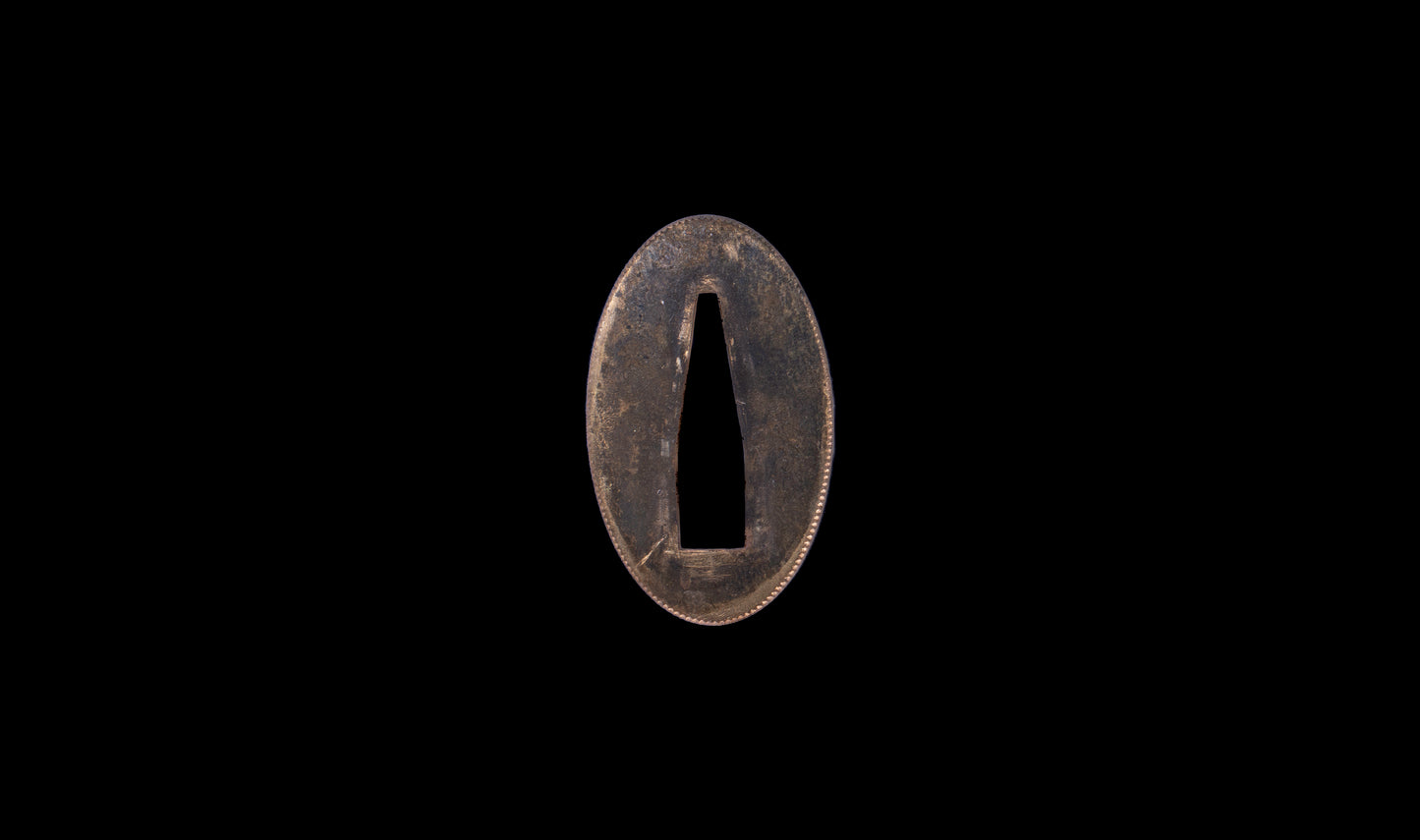
Die tsuba ist ein Werk kühner geometrischer Eisen-sukashi in der marugata (runden) Form. Ein zentraler Diamant verbindet sich über vier strahlende Arme mit vier großen ovalen Öffnungen, die symmetrisch um den Umfang angeordnet sind und eine radförmige Komposition von beeindruckender grafischer Kraft schaffen. Die glatte, tiefe patinierte Eisenoberfläche und die Präzision der Durchbrucharbeit sprechen für einen Spezialisten tsubashi auf der Höhe ihres Handwerks — ein Design, das gleichzeitig in klassischer Form verwurzelt und beeindruckend modern in seiner kompositorischen Sicherheit ist.
Das fuchi-kashira Set präsentiert ein lebhaftes Drachen-in-wirbelnden-Wolken (ryū-zu) Motiv in dunklem shakudō mit Silber und Vergoldung. Der kashira Drache ist tief in kühner Erhabenheit geschnitzt — Schuppen, Krallen und fiesen Ausdruck mit dem selbstbewussten Meißel eines geschickten kinko Handwerkers bearbeitet, Wolkenformen schwingen dynamisch um die Figur. Der fuchi setzt das Programm mit scrollenden Elementen und Goldpunktierung fort. Die menuki erhalten die Drachen-Ikonografie in gepaarten shakudō und vergoldeten Figuren. Der tsuka-ito ist in altem bernsteinfarben Seide über weißem same (Rochenhutskin) im klassischen hishi-maki Geflecht gewickelt — sein warmer Honigton schafft einen raffinierten chromatischen Dialog mit den dunklen Beschlägen und dem glänzenden Gold des Saya-Lacks.
Biografie des Schwertsmieds: Toriū Kamesabu / Hiromasa
Hiromasa (博正), dessen vollständiger Name Toriū Kamesabu (鳥生亀松) war, wurde geboren und lebte in Hōjō-chō, Onsen-gun, Provinz Iyo — das heutige Ehime Präfektur auf der Insel Shikoku. Er trainierte unter Takahashi Yoshimune und erwarb durch diese angesehene Linie eine Meisterschaft in Bizen-den, die seine gesamte Karriere und seinen Ruf prägen würde. Seine Spezialität innerhalb dieser Tradition war der chōji-midare hamon — die exuberante, nelkenförmige Härtung, die am engsten mit der großen Ichimonji Schule der Kamakura-Periode verbunden ist — und seine Ichimonji-utsushi Werke machten ihm Anerkennung als einer der führenden Meister der Shōwa-Ära in diesem anspruchsvollen Genre.
Als vom Kaiserlichen Heer beauftragter Schwertschmied (gen rikugun jusei tōkō) ausgezeichnet, zeichnete sich Hiromasa sogar innerhalb dieser ausgewählten Gruppe als ein Handwerker außergewöhnlicher technischer Fähigkeit aus — seine Schwerter besonders für ihre Eignung für tameshigiri (Testschnitte) bemerkt, ein Zeichen praktischer sowie ästhetischer Exzellenz. Er war Empfänger des Preises des Premierministers (Sōri Daijin-shō) und zahlreicher anderer Preise, und wurde weithin als einer der vielversprechendsten Figuren seiner Generation betrachtet.
In Shōwa 28 (1953) starb Toriū Kamesabu im Alter von fünfundvierzig Jahren. Sein früher Tod hinterließ seinen Bestand an Werken vergleichsweise klein — ein Umstand, der heute jedem überlebenden signierten Schwert außergewöhnliche Seltenheit verleiht. Er war, wie Zeitgenossen anmerkten, ein Schwertschmied, von dem große Dinge erwartet wurden; was er hinterließ, ist mehr als ausreichend, um zu bestätigen, dass diese Erwartung vollständig gerechtfertigt war.
Historischer Kontext: Bizen-den und die Ichimonji-Tradition
Die Ichimonji-Schule der Provinz Bizen, hauptsächlich während der Kamakura-Periode (1185–1333) aktiv, produzierte das, was viele Kenner als den schönsten hamon in der gesamten Geschichte der japanischen Schwertkampfkunst betrachten. Ihr charakteristisches chōji-midare — üppige, nelkenförmige Lappen, die in Fülle vom yakigashira aufsteigen, durchdrungen von nioi und belebt durch ashi und sunagashi — stellt den höchsten Ausdruck der Bizen-den Differentialhärtung dar. Die feinsten Ichimonji-Arbeiten, heute als Nationale Schätze und Wichtige Kulturgüter bewahrt, dienten als ultimativer Maßstab für Bizen-Tradition-Schmiede über alle nachfolgenden Jahrhunderte hinweg.
Der Ichimonji-utsushi — getreue Evokation dieser großen Originale — gehört zu den anspruchsvollsten Herausforderungen der japanischen Schwertherstellung. Das Nachschaffen der organischen Üppigkeit echter Kamakura chōji erfordert nicht nur technische Fertigkeit, sondern ein tiefes intuitives Verständnis der ursprünglichen Ästhetik. Schmiede, die genuinen Erfolg in diesem Genre erreichten, sind selten in der gesamten Geschichte der japanischen Schwertherstellung, und Hiromosas Anerkennung als einer der hervorragendsten Praktiker der Shōwa-Ära stellt ihn in außergewöhnlicher Gesellschaft dar. Eine dokumentierte Hiromosa zu erwerben bedeutet, ein Stück eines der ergreifendsten unterbrochenen Vermächtnisse der Shōwa-Ära zu erwerben — das Werk eines Meisters auf oder nahe seinem kreativen Höhepunkt, festgehalten in der Zeit durch ein Schicksal, das die japanische Schwertenwelt nie aufgehört hat zu trauern.


Einklappbarer Inhalt
Payment
You can pay by Bank card or Bank transfer. If you wish to use bank transfer please contact us using the form bellow with the name of the sword you are willing to buy.
Customs and Taxes
・Import duties, taxes and charges are not included in the item price or shipping charges. These charges are the buyer’s responsibility.
・Please check with your country’s customs office to determine what these additional costs will be prior to bidding/buying.
・These charges are normally collected by the delivering freight (shipping) company or when you pick the item up - do not confuse them for additional shipping charges.
Shipping and Return
- Swords are shipped from Tokyo, Japan. We manage all the procedures to export the sword.
- You can't return sword to Japan because procedures are too strict.
- We work with a shipping company that have experience with Nihonto so you don't have to worry.
- Please check the rules of your country before importing the sword. We do not take any responsibility, including (not limited to) refund, due to the above reasons.
- We can NOT cancel an order once, we already applied for the export authorization. As this document is made to customer name.
We have shipped authentic Japanese swords to the USA, UK, Canada, Mexico, Germany, France, Hong Kong, and Australia. If you don’t live in these countries and like to order, please contact us first before purchasing. We normally ship by EMS (Express Mail Service) provided by Japan Post.
If you live in the UK, please contact us BEFORE order.
Export Procedure (We manage it)
・All our swords are registered in the Agency for Cultural Affairs as artwork and The Board of Education(Cultural properties protection Committee); therefore each sword has the registration card, issued by the Board of Education.
・After receiving the full payment of the items,we return the registration card and get the permission from Ministry of Cultural Affairs to export the swords legally from Japan. It will take about 1 to 3 months for that step.
・After the receiving the permission, we will inform you by email and send the items immediately.
Contact form
What Our Collectors Say
Independent reviews from verified buyers on Trustpilot
Wonderful folks to buy from
“Large selection to choose from. The katana were signed with Hozon and the blades in a shirasaya. My two katana and Kozuka came packed in a solid wooden crate. Great friendly communication.”
Got a beautiful sword delivered to NYC
“Condition is just as pictured. Took a little while to get all the way to the states, but I was very happy with this seller and plan to purchase more from them.”
Order with confidence
“In the end I received what I ordered, well-packaged and in the condition specified.”
Un katana antique magnifique
“J'ai posé beaucoup de questions au support qui a su répondre et m'aider dans mon choix. La commande est arrivée avec le certificat dans un emballage robuste et en parfait état, il est vraiment magnifique !”