

Tokyo Nihonto
Antike japanische Katana mit schwarzer Lackierter Koshirae und Feder-Motiv Eiserner Tsuba signiert Chikushi Tadamasa - Hozon
Antike japanische Katana mit schwarzer Lackierter Koshirae und Feder-Motiv Eiserner Tsuba signiert Chikushi Tadamasa - Hozon
Verfügbarkeit für Abholungen konnte nicht geladen werden
- Signatur (Mei): 筑紫忠正作 Chikushi Tadamasa saku
- Schwertschmied: Chikushi Tadamasa
- Klassifizierung: Gendaitō (現代刀) - modernes traditionell gefertigtes nihonto, Shōwa-Ära
- Zertifikat: NBTHK Hozon Tōken (保存刀剣) Nr. 361035 - ausgestellt Februar 2002 (Heisei 14)
- Montierung: Vollständige schwarze urushi koshirae mit Eisen-Feder-Motiv tsuba
- Klingenlänge (Nagasa): 62,7 cm (2 shaku 0 sun 6 bu 5 rin)
- Krümmung (Sori): 1,3 cm - elegante, zurückhaltende torii-zori
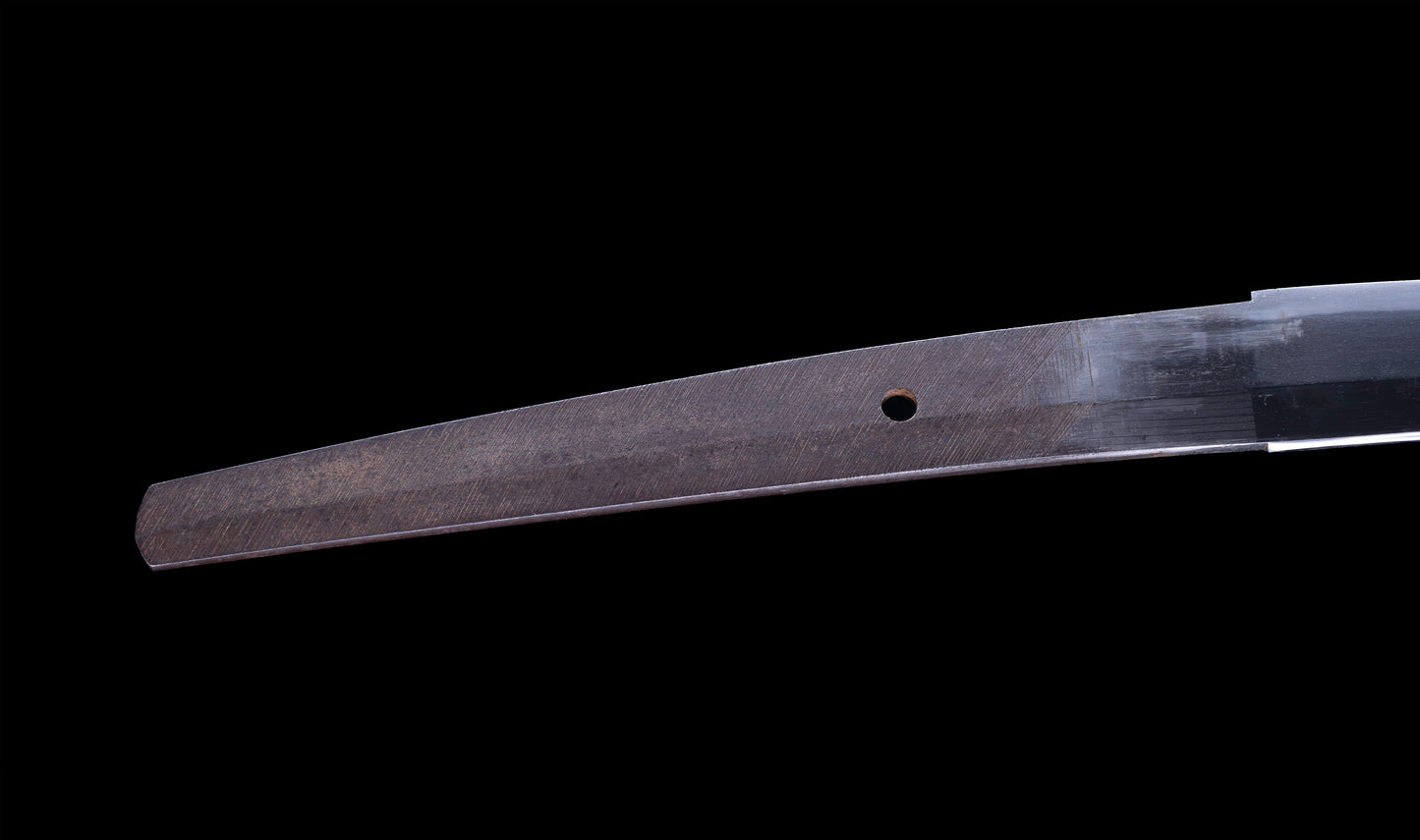
- Mekugi-ana: 1 (ubu - original, unverändertes nakago)
- Form: Shinogi-zukuri mit iori-mune und chū-kissaki
- Jihada: Dichtes, gut geschmiedetes ko-itame
- Hamon: Notare mit gunome, heller nioiguchi, ko-nie und markante ashi
Diese Katana ist ein signiertes, NBTHK Hozon-zertifiziertes gendaitō mit dem mei 筑紫忠正作 (Chikushi Tadamasa saku) und wird von der NBTHK in die Shōwa-Ära datiert. Mit einer Länge von 62,7 cm und einer kontrollierten sori von 1,3 cm ist sie ein vollständig traditionelles japanisches Schwert, das aus tamahagane in klassischer Weise geschmiedet wurde – kein Kriegsarsenal-Blatt und keine Replik. Damit ein Werk des 20. Jahrhunderts die NBTHK shinsa besteht und Hozon-Papiere erhält, müssen die Bewerter sowohl bestätigen, dass die Signatur authentisch ist, als auch dass das Blatt nach echten traditionellen Methoden hergestellt wurde. Genau diese Unterscheidung ist das, was ein echtes nihonto von dem ölgehärteten showatō unterscheidet, das den modernen Markt überschwemmt.
Das Blatt ist gesund und vollkörperig, präsentiert in shinogi-zukuri mit iori-mune und einem ausgewogenen chū-kissaki. Das jihada ist ein dichtes, fest geschmiedetes ko-itame, sauber und gut kontrolliert über das ji – die Art von disziplinierter Körnerung, die ein richtig ausgebildeter Shōwa-Schmied durch geduldiges Falten erreichte. Gegen diesen Grund verläuft das hamon als fließendes notare mit gunome-Wellungen, gesetzt in einem hellen nioiguchi mit einer Abdeckung aus feinem ko-nie.
Das, was diesem Blatt seinen Charakter bei genauer Betrachtung verleiht, ist die Aktivität in der gehärteten Kante: markante ashi reichen in klaren diagonalen Linien zur Schneidkante hinab und brechen das hamon in lebhafte, rhythmische Abschnitte auf. Dies ist Handwerkskunst, die von Hand und unter richtigem Licht studiert werden soll. Das boshi dreht sich in einem ordentlichen ko-maru zurück, mit kontrolliertem hamon, das sauber zur Spitze geführt wird.
Das nakago ist ubu (original und nicht gekürzt), behält seine einzelne mekugi-ana und die deutlich gemeißelte sashimei des Schmieds. Ein unberührter nakago auf einem signierten Blatt ist der ideale Erhaltungszustand – nichts wurde verändert, die Signatur steht genau so, wie der Schmied sie hinterlassen hat, und die NBTHK hat dies bestätigt.
Koshirae-Details
Das Schwert ist in einer kompletten schwarzen koshirae montiert, die eher für stille Eleganz als für Ausstellung gebaut wurde. Die saya ist mit tiefem, glänzendem schwarzem urushi-Lack versiegelt – glatt und schmucklos, wobei die Form der Montierung für sich selbst spricht – und ist mit einem schwarz-weiß gesprenkeltem sageo ausgestattet.
Das tsuba ist die herausragende Beschlag: ein robuster tetsu (Eisen)-Schutz in mokkō-gata (vierlappiger) Form, dessen Platte ehrliche Schmied-Eisen-Textur zeigt. Über beide Seiten verteilt ist es mit verstreuten Federn in Weichmetall-zōgan (Einlage) dekoriert, jede mit feiner kebori-Haarlinien-Gravur zur Darstellung der Feder und der Barben ausgearbeitet. Die Feder – und die Pfeilbefiederung, die sie aufruft – ist ein klassisches Samurai-Motiv, gelesen als Sinnbild von Entschlossenheit und Vorwärtszweck. Zwei hitsu-ana flankieren das zentrale nakago-ana für kozuka und kōgai.
Das tsuka ist in schwarzem ito über weißem same (Rochenhaut) im traditionellen hineri-maki-Diamantmuster gewickelt, die weißen Knötchen des samegawa zeigen sich deutlich durch das Gitter. Unter der Wicklung sitzen fein gegossene menuki in dunkel patinier tem Metall, in detaillierter figurativer Hochrelief gearbeitet. Die Gesamtpräsentation ist zurückhaltend und selbstsicher – eine arbeitende Samurai-Ästhetik statt einer dekorativen.
Hintergrund des Schwertschmieds
Dieses Blatt ist signiert 筑紫忠正作 (Chikushi Tadamasa saku) – „hergestellt von Chikushi Tadamasa." Die NBTHK hat die Arbeit untersucht, die Signatur bestätigt und das Blatt in die Shōwa-Periode datiert, die Ära des modernen traditionellen Schwertschmiedens, die begann, nachdem die lizenzierte Schmiederei im Nachkriegsjapan wieder aufgenommen wurde.
Der Kunstname Chikushi (auch als Tsukushi gelesen) ist der klassische Name für die Länder Nord-Kyushus – die alten Chikuzen- und Chikugo-Provinzen im heutigen Fukuoka – eine Region mit langem Schwertschmied-Erbe. Das Blatt selbst spiegelt solides, orthodoxes Training wider: ein sauberes ko-itame jihada und ein kontrolliertes notare-gunome hamon mit hellem nioiguchi und aktiver ashi, ausgeführt mit der Disziplin, die von einem richtig lizenzierten Shōwa-Schmied erwartet wird, der in tamahagane arbeitet.
Anstatt romantisierte Provenienz an dieses Stück zu hängen, lassen wir die Evidenz sprechen: ein signiertes Blatt, ein ubu nakago, echte traditionelle Handwerkskunst und NBTHK Hozon-Papiere, die alles bestätigen. Das ist eine ehrlichere Grundlage für einen Sammler als eine erfundene Hintergrundgeschichte.
Gendaitō: Moderne Schwerter in der traditionellen Tradition
Ein gendaitō (現代刀, „modernes Schwert") ist ein japanisches Blatt, das ab 1876 nach traditionellen Methoden hergestellt wurde – tamahagane-Stahl, gefaltet und von Hand geschmiedet, differenziell gehärtet mit einer Tonschicht und Wasserhärtung. Die Kategorie wird häufig missverstanden: ein gendaitō ist in jedem technischen Sinne ein echtes nihonto, unterschiedlich von den massenproduzierten, maschinengefertigten, ölgehärteten showatō, die als Kriegsseitenwaffen hergestellt wurden, und tausendmal entfernt von den gegossenen oder rostfreien Replikationen, die als Dekoration verkauft werden.
Die Trennungslinie ist genau das, was die NBTHK-Zertifizierung festlegt. Wenn die NBTHK einem modernen Blatt Hozon Tōken („würdig der Konservierung")-Status verleiht, zertifiziert sie, dass das Schwert von Hand auf traditionelle Weise hergestellt wurde und dass seine Signatur authentisch ist. Für einen Käufer entfernt dieses Papier das größte Risiko auf dem modernen Schwertmarkt: nihonto-Geld für etwas auszugeben, das nie auf traditionelle Weise geschmiedet wurde.
Diese katana sitzt fest auf der richtigen Seite dieser Linie – ein signiertes, Hozon-zertifiziertes Shōwa-Werk in ehrlicher schwarzer koshirae, das die volle Disziplin des japanischen Schwertschmieds-Handwerks in die moderne Zeit bewahrt.


Einklappbarer Inhalt
Payment
You can pay by Bank card or Bank transfer. If you wish to use bank transfer please contact us using the form bellow with the name of the sword you are willing to buy.
Customs and Taxes
・Import duties, taxes and charges are not included in the item price or shipping charges. These charges are the buyer’s responsibility.
・Please check with your country’s customs office to determine what these additional costs will be prior to bidding/buying.
・These charges are normally collected by the delivering freight (shipping) company or when you pick the item up - do not confuse them for additional shipping charges.
Shipping and Return
- Swords are shipped from Tokyo, Japan. We manage all the procedures to export the sword.
- You can't return sword to Japan because procedures are too strict.
- We work with a shipping company that have experience with Nihonto so you don't have to worry.
- Please check the rules of your country before importing the sword. We do not take any responsibility, including (not limited to) refund, due to the above reasons.
- We can NOT cancel an order once, we already applied for the export authorization. As this document is made to customer name.
We have shipped authentic Japanese swords to the USA, UK, Canada, Mexico, Germany, France, Hong Kong, and Australia. If you don’t live in these countries and like to order, please contact us first before purchasing. We normally ship by EMS (Express Mail Service) provided by Japan Post.
If you live in the UK, please contact us BEFORE order.
Export Procedure (We manage it)
・All our swords are registered in the Agency for Cultural Affairs as artwork and The Board of Education(Cultural properties protection Committee); therefore each sword has the registration card, issued by the Board of Education.
・After receiving the full payment of the items,we return the registration card and get the permission from Ministry of Cultural Affairs to export the swords legally from Japan. It will take about 1 to 3 months for that step.
・After the receiving the permission, we will inform you by email and send the items immediately.
Contact form
What Our Collectors Say
Independent reviews from verified buyers on Trustpilot
Wonderful folks to buy from
“Large selection to choose from. The katana were signed with Hozon and the blades in a shirasaya. My two katana and Kozuka came packed in a solid wooden crate. Great friendly communication.”
Got a beautiful sword delivered to NYC
“Condition is just as pictured. Took a little while to get all the way to the states, but I was very happy with this seller and plan to purchase more from them.”
Order with confidence
“In the end I received what I ordered, well-packaged and in the condition specified.”
Un katana antique magnifique
“J'ai posé beaucoup de questions au support qui a su répondre et m'aider dans mon choix. La commande est arrivée avec le certificat dans un emballage robuste et en parfait état, il est vraiment magnifique !”