


Tokyo Nihonto
Antique Japanese Katana Sword, Edo Period with Musha-e Battle Koshirae
Antique Japanese Katana Sword, Edo Period with Musha-e Battle Koshirae
Impossible de charger la disponibilité du service de retrait
Save 3% with bank transfer payment, no transaction fees. Contact us here.
LIVRAISON AUX ÉTATS-UNIS ⚠️
À partir du 9 octobre 2025
LIVRAISON AUX ÉTATS-UNIS ⚠️
À partir du 9 octobre 2025
En raison de récents changements réglementaires aux États-Unis en vertu d'un décret présidentiel, Japan Post (EMS) a suspendu toutes les livraisons commerciales aux États-Unis.
Par conséquent, nous faisons désormais appel à des transporteurs privés alternatifs. Ces options étant nettement plus onéreuses, nous demandons à nos clients américains de participer aux frais de livraison (100 $ pour les commandes américaines).
Nous apprécions sincèrement votre compréhension et votre soutien continu.
- Signature (Mei): Mumei (無銘 - Unsigned)
- Period / Province: Mid to Late Edo Period (circa 1700-1850)
- Mounting: Exceptional period koshirae with warrior battle scene (musha-e) theme
- Blade Length (Nagasa): 63.1 cm (2 shaku 8 bu)
- Curvature (Sori): 1.6 cm - elegant shallow Edo-period curve
- Mekugi-ana: 2
- Base Width (Motohaba): 28.3 mm
- Base Thickness (Motokasane): 6.3 mm
- Tip Width (Sakihaba): 19.1 mm
- Tip Thickness (Sakikasane): 5.0 mm
- Blade Weight: 585g (naked) / 859g (mounted)
- Shape: Shinogi-zukuri with refined Edo proportions
- Jihada: Well-forged with visible grain structure
- Hamon: Midare (irregular) pattern with active temper line
This elegant katana exemplifies the refined aesthetic of the mid to late Edo period, when Japanese swordmaking shifted from battlefield necessity to artistic expression and cultural symbolism. Measuring 63.1 cm with a graceful 1.6 cm sori, this blade represents the standardized peacetime proportions that became favored during the long Tokugawa era—designed as much for beauty and tradition as for martial capability.
The blade displays an attractive midare (irregular) hamon pattern, featuring dynamic undulations and varied activity along the cutting edge. This lively tempering style demonstrates the smith's technical skill and artistic sensibility, creating visual interest while maintaining structural integrity. The steel shows clean forging with well-defined grain structure, and the professional polish reveals crisp definition throughout. The relatively light weight of 585 grams suggests refined construction optimized for nimble handling and cutting performance rather than heavy battlefield use.
While unsigned (mumei), the blade's quality construction, elegant proportions, and sophisticated hamon indicate competent smithing from one of the established sword-producing regions of Edo-period Japan. The presence of two mekugi-ana (peg holes) suggests the sword has seen generations of careful use and remounting, speaking to its enduring value as a family treasure or collected piece.
Exceptional Warrior-Themed Koshirae
This katana's greatest distinction lies in its magnificent period mountings, featuring museum-quality metalwork centered on a dramatic musha-e (warrior battle scene) theme. The koshirae represents the height of late Edo artistic craftsmanship, when master metalworkers created fittings that were appreciated as independent art objects.
Fuchi-Kashira (Collar & Pommel): Battle Scene in High Relief
The fuchi-kashira set presents a spectacular warrior battle composition executed in shakudō with lavish gilt highlights. The design depicts mounted samurai warriors in full armor engaged in dramatic combat, rendered in exceptionally high relief that creates remarkable depth and dimensionality.
The kashira (pommel) shows a warrior figure in elaborate armor with flowing movement, capturing the dynamic energy of battle. Every detail is meticulously carved—from the individual armor plates (ō-yoroi) to the warrior's fierce expression and combat stance. The fuchi (collar) continues the narrative with complementary warrior imagery, possibly depicting the opposing combatant or a continuation of the same battle scene.
The contrast between the dark shakudō base and the bright gilt details creates stunning visual drama, while the deep relief carving demonstrates master-level metalworking technique. This style of narrative battle imagery was particularly popular during the late Edo period, when the samurai class—having lived generations in peace—romanticized the martial exploits of their ancestors through artistic representations.
Menuki (Handle Ornaments): Dragon Design
Beneath the handle wrapping lie dragon menuki in gilt metal, adding both symbolic meaning and functional grip texture. The dragon (ryū) represents power, wisdom, and protection in Japanese culture—an auspicious motif befitting a samurai's sword. These substantial ornaments are visible as raised areas under the wrap, contributing to the handle's secure, comfortable grip.
Tsuka (Handle)
The handle features traditional grey silk tsuka-ito (wrap) in the classic hishimaki diamond pattern, tightly and professionally bound. The wrap remains in excellent condition, showing the characteristic texture and tight weave of quality Edo-period work. The grey color provides sophisticated restraint that allows the dramatic fuchi to command visual attention.
Tsuba (Guard)
The iron tsuba presents elegant simplicity in contrast to the elaborate fuchi-kashira. The plain maru-gata (round) design in forged iron represents the refined aesthetic of understated quality—allowing the blade and other fittings to take center stage while providing solid, functional protection. This restrained approach to the tsuba was often favored by discriminating collectors who valued subtle excellence over ostentatious decoration.
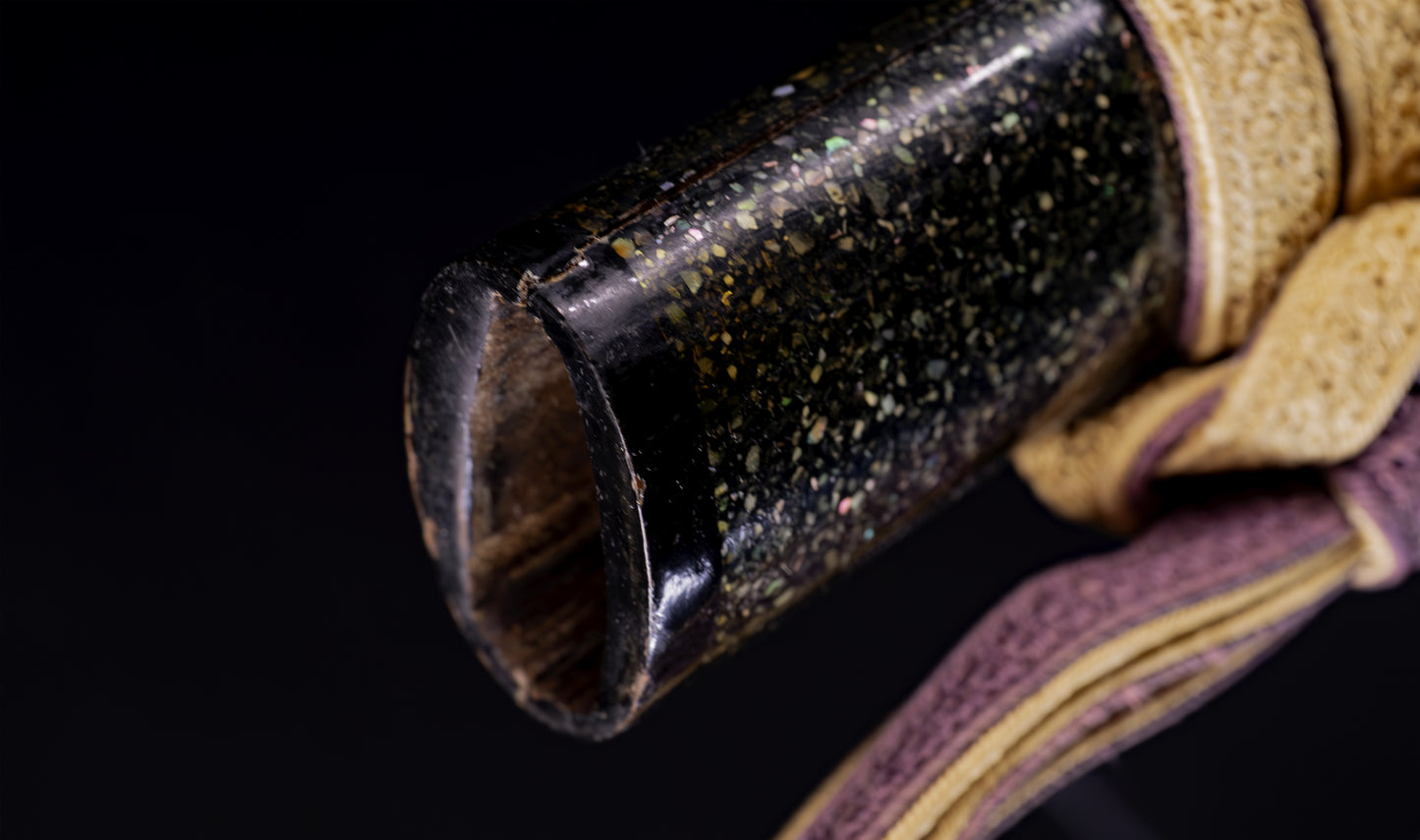
Saya (Scabbard): Nashiji Gold Lacquer
The scabbard showcases exceptional lacquerwork in the nashiji technique—a sophisticated finish where fine gold powder is sprinkled into black lacquer to create a shimmering, textured surface resembling pear skin. This labor-intensive decoration method was reserved for higher-status mountings, requiring multiple layers of lacquer application and polishing by skilled artisans.
The black lacquer base with gold nashiji overlay creates a luminous, jewel-like appearance that catches light beautifully while maintaining dignified restraint appropriate to samurai aesthetic sensibilities. The saya remains in excellent structural condition with its lacquer showing honest age and patina that speaks to centuries of careful stewardship.
Sageo (Hanging Cord)
The mounting includes a beautiful purple and gold silk sageo, woven in traditional style and remaining in remarkable condition. The color combination—purple being historically associated with nobility and high rank—complements the gold nashiji of the saya while adding a note of aristocratic elegance to the overall presentation.
Historical Context: The Warrior's Nostalgia
This katana was created during the mid to late Edo period (approximately 1700-1850), an era of unprecedented peace under Tokugawa rule that fundamentally transformed samurai identity. By the 18th century, the warrior class had evolved from active combatants into hereditary bureaucrats and administrators who had never experienced warfare. Yet the sword remained the ultimate symbol of samurai status—both a legal privilege and a spiritual connection to martial heritage.
During this period of peace, an interesting cultural phenomenon emerged: samurai developed intense nostalgia for the martial glory of their ancestors. Having been raised on tales of legendary warriors and epic battles but never experiencing combat themselves, Edo-period samurai cultivated their warrior identity through ritual, art, and symbolism. Sword fittings became a primary medium for expressing this romanticized martial heritage.
The musha-e (warrior picture) theme seen on this sword's fittings represents this cultural trend perfectly. Rather than depicting contemporary Edo life, these elaborate battle scenes looked backward to the great conflicts of the Kamakura, Muromachi, and Sengoku periods—the Genpei Wars, the battles of Kawanakajima, the unification struggles under Nobunaga and Hideyoshi. These images allowed samurai to visually connect with the warrior ethos they aspired to embody, even in an age when their swords would never see battle.


Contenu réductible
Paiement
Vous pouvez payer par carte bancaire ou virement bancaire. Si vous souhaitez utiliser le virement bancaire, veuillez nous contacter en utilisant le formulaire ci-dessous avec le nom du sabre que vous souhaitez acheter.
Douanes et Taxes
・Les droits d'importation, les taxes et les frais ne sont pas inclus dans le prix de l'article ou les frais d'expédition. Ces charges sont sous la responsabilité de l'acheteur.
・Veuillez vérifier auprès du bureau de douane de votre pays pour déterminer quels seront ces coûts supplémentaires avant d'enchérir/d'acheter.
・Ces frais sont normalement collectés par la société de livraison de fret (expédition) ou lorsque vous récupérez l'article - ne les confondez pas avec des frais d'expédition supplémentaires.
Expédition et retour
Les sabres sont expédiées de Tokyo, au Japon . Nous gérons toutes les procédures pour exporter le sabre.
Vous ne pouvez pas renvoyer le sabre au Japon car les procédures sont trop strictes.
Nous travaillons avec une compagnie maritime qui a de l'expérience avec Nihonto afin que vous n'ayez pas à vous inquiéter.
Veuillez vérifier les règles de votre pays avant d'importer le sabr. Nous n'assumons aucune responsabilité, y compris (sans s'y limiter) le remboursement, pour les raisons ci-dessus.
Procédure d'exportation (nous la gérons)
・Tous nos sabres sont enregistrées auprès de l'Agence des affaires culturelles en tant qu'œuvres d'art et du Conseil de l'éducation (Comité de protection des biens culturels) ; donc chaque sabre a la carte d'enregistrement, délivrée par le Board of Education.
・Après avoir reçu le paiement intégral des articles, nous renvoyons la carte d'enregistrement et obtenons l'autorisation du ministère des Affaires culturelles d'exporter légalement les sabres du Japon. Il faudra environ 20 jours ouvrables pour effectuer cette procédure.
・Après réception de l'autorisation, nous vous informerons par e-mail et enverrons les articles immédiatement.