


Tokyo Nihonto
Antique Japanese Katana Sword, Late Edo Shishi Koshirae
Antique Japanese Katana Sword, Late Edo Shishi Koshirae
Impossible de charger la disponibilité du service de retrait
Save 3% with bank transfer payment, no transaction fees. Contact us here.
LIVRAISON AUX ÉTATS-UNIS ⚠️
À partir du 9 octobre 2025
LIVRAISON AUX ÉTATS-UNIS ⚠️
À partir du 9 octobre 2025
En raison de récents changements réglementaires aux États-Unis en vertu d'un décret présidentiel, Japan Post (EMS) a suspendu toutes les livraisons commerciales aux États-Unis.
Par conséquent, nous faisons désormais appel à des transporteurs privés alternatifs. Ces options étant nettement plus onéreuses, nous demandons à nos clients américains de participer aux frais de livraison (100 $ pour les commandes américaines).
Nous apprécions sincèrement votre compréhension et votre soutien continu.
- Signature (Mei): Mumei (無銘 - Unsigned)
- Period / Province: Mid to Late Edo Period (circa 1750-1850)
- Mounting: Exceptional period koshirae with shishi (guardian lion) theme
- Blade Length (Nagasa): 70.8 cm (2 shaku 3 sun 4 bu)
- Curvature (Sori): 2.6 cm - classic Edo-period geometry
- Mekugi-ana: 1
- Hi (Groove): Bo-hi (full-length groove) on both sides
- Shape: Shinogi-zukuri with elegant Edo-period proportions
- Jihada: Well-defined grain visible through excellent polish
- Hamon: Gunome-midare with active nie and bright nioikuchi
This beautifully preserved katana represents the refined craftsmanship of the mid to late Edo period, an era when Japanese swordmaking balanced technical excellence with artistic sophistication. Measuring a full 70.8 cm with an elegant 2.6 cm sori, this blade exemplifies the standardized yet graceful proportions favored during the Tokugawa peace—designed not for constant battlefield use but as the symbol of samurai status and martial heritage.
The blade showcases a vibrant gunome-midare hamon pattern, featuring dynamic clove-shaped peaks with bright nie crystals dancing along the habuchi. This active tempering style reflects the Edo-period revival of classical Kamakura and Muromachi aesthetics, demonstrating the smith's technical mastery and artistic sensibility. The blade features a bo-hi (full-length groove) carved on both sides, running cleanly from near the habaki to the point area. This groove serves both practical and aesthetic functions—reducing the blade's weight for improved handling while creating the distinctive tachikaze (sword wind) sound when cutting through air. The steel has received professional polish, revealing crisp definition in both the grain structure and temper line—testament to quality iron and skilled heat treatment.
While unsigned (mumei), this blade's excellent condition, refined proportions, and sophisticated hamon pattern indicate the work of a competent smith operating within one of the major sword-producing centers of late Edo Japan. The single mekugi-ana and well-preserved tang suggest the blade remains in its original, unshortened state.
Exceptional Koshirae Details
This sword's true distinction lies in its remarkable period mountings, featuring museum-quality metalwork that elevates it far above ordinary Edo-period katana. The koshirae centers on a powerful shishi (guardian lion-dog) theme executed in masterful shakudō with gilt highlights.
Fuchi-Kashira (Collar & Pommel)
The fuchi presents an asymmetric artistic composition with different motifs on each side—a sophisticated approach favored by discerning collectors. One side features a magnificent shishi emerging from stylized clouds, its flowing mane rendered in high relief with exceptional detail. The mythical guardian's fierce expression and dynamic posture embody protective power and martial valor. The reverse side presents a contrasting serene scene of floral elements, creating a philosophical balance between dynamic yang energy (the lion) and peaceful yin harmony (the plants).
The kashira (pommel) continues the shishi theme with equally sophisticated carving, showing the guardian lion amid swirling clouds rendered in deep relief. The dark shakudō base with warm gilt accents creates stunning visual contrast, while the metal's natural patina speaks to authentic age and careful preservation.
Tsuka (Handle)
The handle features traditional black tsuka-ito (silk wrap) in the classic hishimaki diamond pattern, tightly and professionally bound. Beneath the wrap, substantial menuki ornaments in gilt shakudō or gold depict organic forms—possibly pine cones or similar auspicious motifs—adding both aesthetic beauty and functional grip texture. The wrap remains in excellent condition, showing minimal wear despite evident age.
Tsuba (Guard)
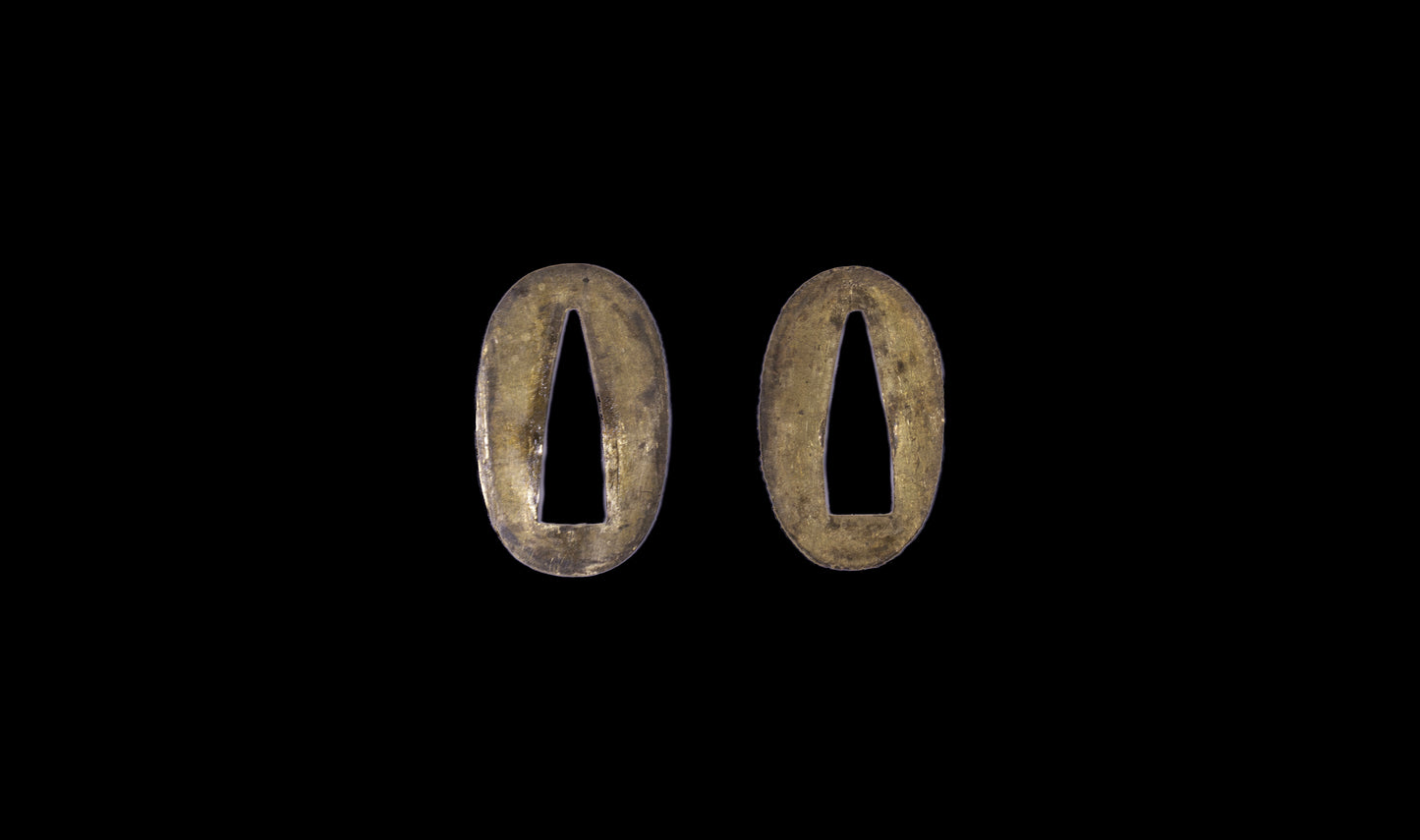
The iron tsuba is a masterwork of sukashi (silhouette openwork) design, featuring an elegant composition of natural elements. The round form with subtle mokko (four-lobed) edge contains beautifully balanced negative space depicting waves or flowing water at the base, a crescent moon above, and delicate cloud or landscape elements throughout. Small accent details—possibly birds or insects—add visual interest without overwhelming the composition.
Habaki (Blade Collar)
The blade is fitted with a silver habaki—a significant detail indicating this sword's elevated status. Silver habaki were reserved for higher-grade blades, as the precious metal cost considerably more than the standard brass or copper alternatives. The single-piece construction shows honest age with natural patina, remaining functionally sound while bearing witness to centuries of careful stewardship.
Saya (Scabbard)
The black lacquered saya provides dignified presentation befitting the elaborate fittings. While showing age-appropriate wear, the scabbard remains structurally sound and properly fitted to the blade.
Historical Context: Mid to Late Edo Period
This katana was forged during the mid to late Edo period (approximately 1750-1850), an era of unprecedented peace and cultural refinement in Japan. After centuries of warfare, the Tokugawa shogunate had established absolute control, and the samurai class transformed from active warriors into hereditary bureaucrats and administrators. Yet the sword remained the ultimate symbol of samurai identity and privilege—only members of the warrior class could legally wear the daishō (paired swords).
During this period, sword production shifted focus from purely functional battlefield weapons to objects that balanced practical capability with artistic expression. Smiths consciously revived classical styles from the Kamakura and Muromachi periods, creating blades like this one with dynamic gunome-midare hamon patterns that honored earlier traditions while incorporating Edo-period technical refinements.
The elaborate koshirae represents the aesthetic sophistication of urban samurai culture during the Bunka-Bunsei era (1804-1830) and surrounding decades, when metalworking arts reached extraordinary heights. Skilled kinkō (metal artists) in Edo (Tokyo), Osaka, and other major cities created tsuba, fuchi-kashira, and other fittings that were collected and appreciated as independent art objects. The shishi motif—borrowed from Chinese guardian lion imagery—was particularly popular during this period, symbolizing protection, strength, and the owner's cultural refinement.


Contenu réductible
Paiement
Vous pouvez payer par carte bancaire ou virement bancaire. Si vous souhaitez utiliser le virement bancaire, veuillez nous contacter en utilisant le formulaire ci-dessous avec le nom du sabre que vous souhaitez acheter.
Douanes et Taxes
・Les droits d'importation, les taxes et les frais ne sont pas inclus dans le prix de l'article ou les frais d'expédition. Ces charges sont sous la responsabilité de l'acheteur.
・Veuillez vérifier auprès du bureau de douane de votre pays pour déterminer quels seront ces coûts supplémentaires avant d'enchérir/d'acheter.
・Ces frais sont normalement collectés par la société de livraison de fret (expédition) ou lorsque vous récupérez l'article - ne les confondez pas avec des frais d'expédition supplémentaires.
Expédition et retour
Les sabres sont expédiées de Tokyo, au Japon . Nous gérons toutes les procédures pour exporter le sabre.
Vous ne pouvez pas renvoyer le sabre au Japon car les procédures sont trop strictes.
Nous travaillons avec une compagnie maritime qui a de l'expérience avec Nihonto afin que vous n'ayez pas à vous inquiéter.
Veuillez vérifier les règles de votre pays avant d'importer le sabr. Nous n'assumons aucune responsabilité, y compris (sans s'y limiter) le remboursement, pour les raisons ci-dessus.
Procédure d'exportation (nous la gérons)
・Tous nos sabres sont enregistrées auprès de l'Agence des affaires culturelles en tant qu'œuvres d'art et du Conseil de l'éducation (Comité de protection des biens culturels) ; donc chaque sabre a la carte d'enregistrement, délivrée par le Board of Education.
・Après avoir reçu le paiement intégral des articles, nous renvoyons la carte d'enregistrement et obtenons l'autorisation du ministère des Affaires culturelles d'exporter légalement les sabres du Japon. Il faudra environ 20 jours ouvrables pour effectuer cette procédure.
・Après réception de l'autorisation, nous vous informerons par e-mail et enverrons les articles immédiatement.