


Tokyo Nihonto
Trusted by collectors · TrustpilotKatana Giapponese Antico con Koshirae in Lacca Nera e Tsuba in Ferro con Motivo Piuma firmato Chikushi Tadamasa - Hozon
Katana Giapponese Antico con Koshirae in Lacca Nera e Tsuba in Ferro con Motivo Piuma firmato Chikushi Tadamasa - Hozon
Impossibile caricare la disponibilità di ritiro
- Firma (Mei): 筑紫忠正作 Chikushi Tadamasa saku
- Maestro spadaio: Chikushi Tadamasa
- Classificazione: Gendaitō (現代刀) - nihonto tradizionali moderni, epoca Shōwa
- Certificato: NBTHK Hozon Tōken (保存刀剣) N. 361035 - rilasciato febbraio 2002 (Heisei 14)
- Montatura: Koshirae completo in urushi nero con tsuba in ferro a motivo di piuma
- Lunghezza della lama (Nagasa): 62,7 cm (2 shaku 0 sun 6 bu 5 rin)
- Curvatura (Sori): 1,3 cm - elegante, sobria torii-zori
- Mekugi-ana: 1 (ubu - originale, nakago inalterato)
- Forma: Shinogi-zukuri con iori-mune e chū-kissaki
- Jihada: Ko-itame stretto e ben forgiato
- Hamon: Notare con gunome, nioiguchi brillante, ko-nie e ashi prominenti
Questa Katana è una spada firmata, certificata NBTHK Hozon, gendaitō recante il mei 筑紫忠正作 (Chikushi Tadamasa saku) e datata dal NBTHK all'epoca Shōwa. Misurando 62,7 cm con una controllata sori di 1,3 cm, è una spada giapponese completamente tradizionale forgiata da tamahagane nel modo classico—non una lama d'arsenale bellica e non una replica. Affinché un'opera del XX secolo superi lo shinsa NBTHK e riceva i documenti Hozon, i periti devono confermare sia che la firma è autentica sia che la lama è stata realizzata con metodi tradizionali genuini. Questa distinzione è esattamente ciò che separa un vero nihonto dagli showatō temprati in olio che inondano il mercato moderno.
La lama è sana e robusta, presentata in shinogi-zukuri con iori-mune e un equilibrato chū-kissaki. La jihada è una densa ko-itame strettamente forgiata, pulita e ben controllata lungo il ji—il tipo di grana disciplinata che uno spadaio Shōwa addestrato correttamente ha ottenuto attraverso pazienti piegamenti. Su questo sfondo, l'hamon scorre come una fluida notare con ondulazioni gunome, posto in un brillante nioiguchi con un rivestimento di fine ko-nie.
Ciò che conferisce a questa lama il suo carattere in stretta ispezione è l'attività all'interno del bordo indurito: pronunciati ashi si estendono verso il filo tagliente in chiare linee diagonali, rompendo l'hamon in compartimenti vivi e ritmici. Questo è artigianato pensato per essere studiato in mano e alla giusta luce. Il boshi si piega indietro in un ordinato ko-maru, con hamon controllato portato nitidamente alla punta.
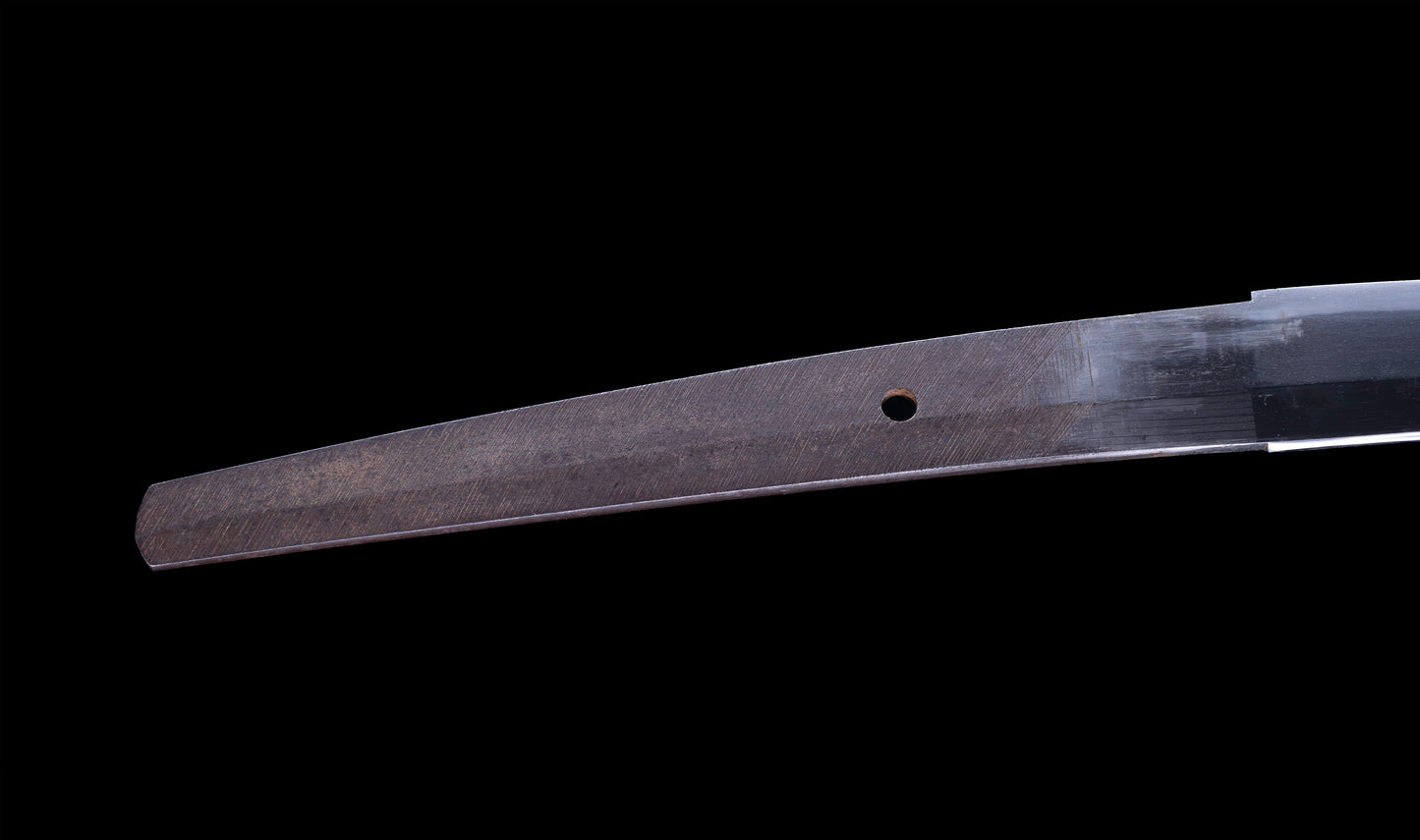
Il nakago è ubu (originale e non accorciato), mantenendo il suo singolo mekugi-ana e lo sashimei chiaramente cesellato del maestro. Un tang intoccato su una lama firmata è lo stato ideale di conservazione—nulla è stato alterato, la firma rimane esattamente come il maestro l'ha lasciata, e l'NBTHK l'ha confermato.
Dettagli del Koshirae
La spada è montata in un completo koshirae nero costruito per eleganza sobria piuttosto che per esposizione. La saya è rifinita in profondo, lucido nero urushi lacca—liscia e senza ornamenti, lasciando che la forma della montatura parli per sé—e è rivestita con uno sageo nero e bianco punteggiato.
Il tsuba è l'elemento di spicco: una robusta guardia in tetsu (ferro) in forma mokkō-gata (a quattro lobi), la sua placca che mostra la genuina texture del ferro forgiato. Su entrambe le facce è decorato con piume sparse in zōgan (intarsio) in metallo morbido, ognuna dettagliata con fine incisione kebori a capillare per rendere la calamo e le barbe. La piuma—e l'impennaggio della freccia che evoca—è un motivo samurai classico, letto come emblema di risolutezza e proposito in avanti. Due hitsu-ana fiancheggiano il centrale nakago-ana per kozuka e kōgai.
La tsuka è avvolta in nero ito su bianco same (pelle di razza) nel tradizionale motivo a diamante hineri-maki, i noduli bianchi della samegawa che si mostrano nitidamente attraverso il reticolo. Sotto l'avvolgimento si trovano finemente fusi menuki in metallo con patina scura, lavorati in rilievo figurativo dettagliato. La presentazione generale è sobria e sicura—un'estetica samurai funzionale piuttosto che decorativa.
Background del Maestro Spadaio
Questa lama è firmata 筑紫忠正作 (Chikushi Tadamasa saku)—"fatto da Chikushi Tadamasa." L'NBTHK ha esaminato l'opera, confermato la firma, e datato la lama al periodo Shōwa, l'era della spada tradizionale moderna che è iniziata quando la forgiatura concessa in licenza è ripresa nel Giappone del dopoguerra.
Il nome artistico Chikushi (anche letto Tsukushi) è il nome classico per le terre del nord di Kyushu—le antiche province di Chikuzen e Chikugo, nell'attuale Fukuoka—una regione con una lunga eredità di fabbricazione di spade. La lama stessa riflette un addestramento solido e ortodosso: una pulita jihada ko-itame e un controllato hamon notare-gunome con nioiguchi brillante e ashi attivo, eseguito con la disciplina attesa da uno spadaio Shōwa adeguatamente autorizzato che lavora con tamahagane.
Piuttosto che attaccare una provenienza romanticizzata a questo pezzo, lasciamo che le prove parlino: una lama firmata, un tang ubu, artigianato tradizionale genuino, e documenti NBTHK Hozon che confermano tutto. Questo è una fondazione più onesta per un collezionista rispetto a una storia inventata.
Gendaitō: Spade Moderne nella Tradizione Tradizionale
Un gendaitō (現代刀, "spada moderna") è una lama giapponese realizzata dal 1876 in poi con metodi tradizionali—acciaio tamahagane, piegato e forgiato a mano, indurito differenzialmente con un rivestimento di argilla e tempra ad acqua. La categoria è frequentemente fraintesa: un gendaitō è un vero nihonto in ogni senso tecnico, distinto dalla massa-prodotta, fabbricata a macchina, temprata in olio showatō prodotta come armi da fianco belliche, e mondi a parte dalle repliche fuse o in acciaio inossidabile vendute come decorazione.
La linea di demarcazione è precisamente ciò che la certificazione NBTHK stabilisce. Quando l'NBTHK assegna lo status Hozon Tōken ("degno di preservazione") a una lama moderna, sta certificando che la spada è stata realizzata a mano nel modo tradizionale e che la sua firma è autentica. Per un acquirente, quella carta rimuove il singolo più grande rischio nel mercato delle spade moderne: pagare soldi da nihonto per qualcosa che non è mai stato tradizionalmente forgiato affatto.
Questa katana si trova fermamente dalla giusta parte di quella linea—un'opera Shōwa firmata e certificata Hozon in onesto koshirae nero, preservando la piena disciplina dell'artigianato del spadaio giapponese nell'età moderna.


Contenuto comprimibile
Payment
You can pay by Bank card or Bank transfer. If you wish to use bank transfer please contact us using the form bellow with the name of the sword you are willing to buy.
Customs and Taxes
・Import duties, taxes and charges are not included in the item price or shipping charges. These charges are the buyer’s responsibility.
・Please check with your country’s customs office to determine what these additional costs will be prior to bidding/buying.
・These charges are normally collected by the delivering freight (shipping) company or when you pick the item up - do not confuse them for additional shipping charges.
Shipping and Return
- Swords are shipped from Tokyo, Japan. We manage all the procedures to export the sword.
- You can't return sword to Japan because procedures are too strict.
- We work with a shipping company that have experience with Nihonto so you don't have to worry.
- Please check the rules of your country before importing the sword. We do not take any responsibility, including (not limited to) refund, due to the above reasons.
- We can NOT cancel an order once, we already applied for the export authorization. As this document is made to customer name.
We have shipped authentic Japanese swords to the USA, UK, Canada, Mexico, Germany, France, Hong Kong, and Australia. If you don’t live in these countries and like to order, please contact us first before purchasing. We normally ship by EMS (Express Mail Service) provided by Japan Post.
If you live in the UK, please contact us BEFORE order.
Export Procedure (We manage it)
・All our swords are registered in the Agency for Cultural Affairs as artwork and The Board of Education(Cultural properties protection Committee); therefore each sword has the registration card, issued by the Board of Education.
・After receiving the full payment of the items,we return the registration card and get the permission from Ministry of Cultural Affairs to export the swords legally from Japan. It will take about 1 to 3 months for that step.
・After the receiving the permission, we will inform you by email and send the items immediately.
Contact form
What Our Collectors Say
Independent reviews from verified buyers on Trustpilot
Wonderful folks to buy from
“Large selection to choose from. The katana were signed with Hozon and the blades in a shirasaya. My two katana and Kozuka came packed in a solid wooden crate. Great friendly communication.”
Got a beautiful sword delivered to NYC
“Condition is just as pictured. Took a little while to get all the way to the states, but I was very happy with this seller and plan to purchase more from them.”
Order with confidence
“In the end I received what I ordered, well-packaged and in the condition specified.”
Un katana antique magnifique
“J'ai posé beaucoup de questions au support qui a su répondre et m'aider dans mon choix. La commande est arrivée avec le certificat dans un emballage robuste et en parfait état, il est vraiment magnifique !”