

Tokyo Nihonto
Katana Japonesa Antigua con Koshirae de Laca Negra y Tsuba de Hierro con Motivo de Pluma firmada Chikushi Tadamasa - Hozon
Katana Japonesa Antigua con Koshirae de Laca Negra y Tsuba de Hierro con Motivo de Pluma firmada Chikushi Tadamasa - Hozon
No se pudo cargar la disponibilidad de retiro
- Firma (Mei): 筑紫忠正作 Chikushi Tadamasa saku
- Forjador: Chikushi Tadamasa
- Clasificación: Gendaitō (現代刀) - nihonto hecho tradicionalmente moderno, era Shōwa
- Certificado: NBTHK Hozon Tōken (保存刀剣) Nº 361035 - emitido en febrero de 2002 (Heisei 14)
- Montaje: Koshirae completo negro urushi con tsuba de hierro con motivo de pluma
- Longitud de hoja (Nagasa): 62,7 cm (2 shaku 0 sun 6 bu 5 rin)
- Curvatura (Sori): 1,3 cm - elegante, contenido torii-zori
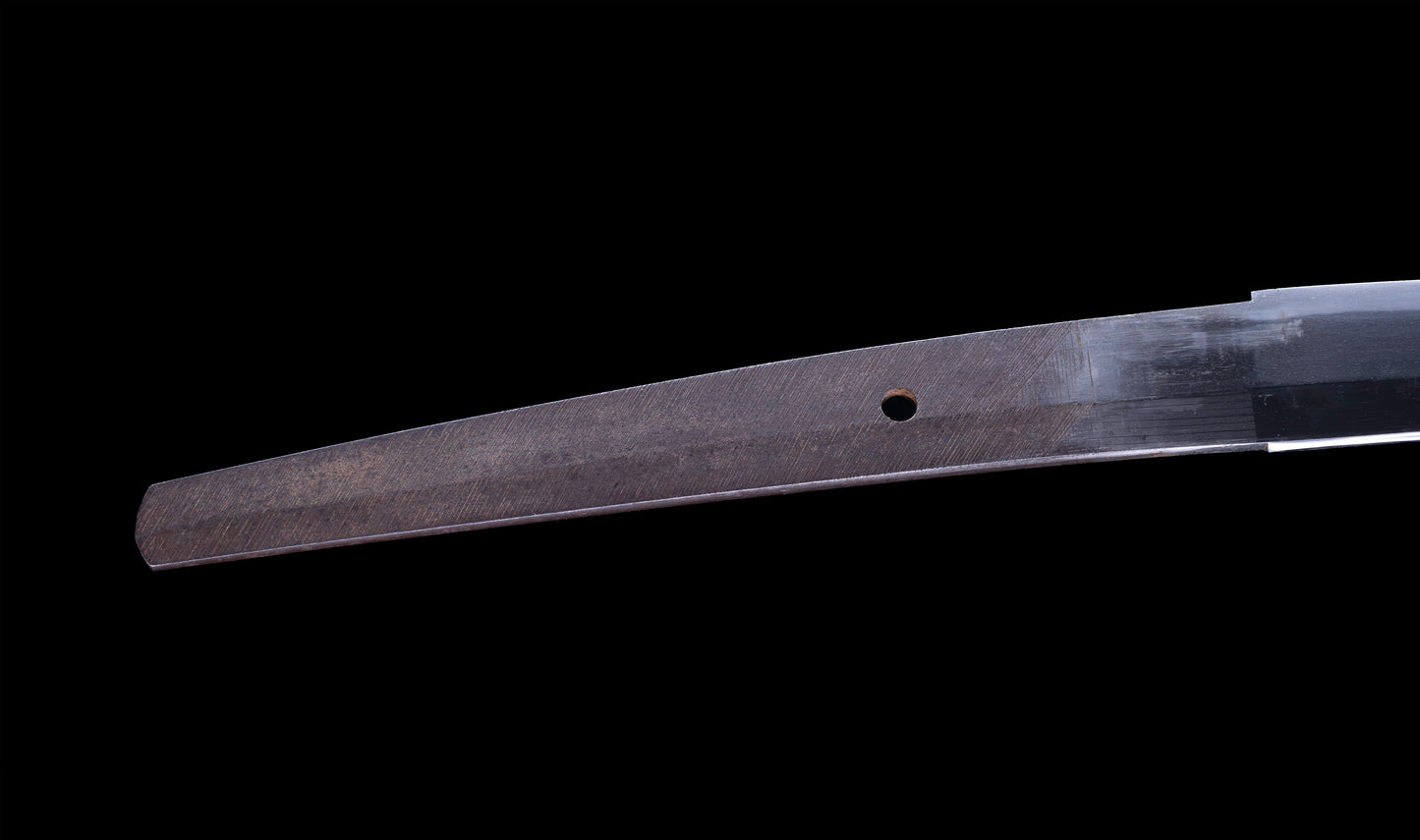
- Mekugi-ana: 1 (ubu - original, nakago sin alterar)
- Forma: Shinogi-zukuri con iori-mune y chū-kissaki
- Jihada: Ko-itame ajustado y bien forjado
- Hamon: Notare con gunome, nioiguchi brillante, ko-nie y ashi prominente
Esta Katana es una gendaitō certificada por NBTHK Hozon con firma que lleva el mei 筑紫忠正作 (Chikushi Tadamasa saku) y fechada por el NBTHK en la era Shōwa. Con una medida de 62,7 cm y un controlado sori de 1,3 cm, es una espada japonesa completamente tradicional forjada en tamahagane a la manera clásica—no una hoja de arsenal de época de guerra ni una réplica. Para que una obra del siglo XX supere el shinsa del NBTHK y reciba papeles Hozon, los tasadores deben confirmar tanto que la firma es auténtica como que la hoja fue hecha por métodos tradicionales genuinos. Esa distinción es precisamente lo que separa un verdadero nihonto de los showatō templados con aceite que inundan el mercado moderno.
La hoja es saludable y de cuerpo completo, presentada en shinogi-zukuri con iori-mune y un equilibrado chū-kissaki. El jihada es un denso ko-itame muy bien forjado, limpio y bien controlado en toda la ji—el tipo de grano disciplinado que un herrero Shōwa adecuadamente entrenado lograba mediante plegado paciente. Contra este fondo, el hamon discurre como un fluido notare con ondulaciones de gunome, dispuesto en un brillante nioiguchi con un recubrimiento de fino ko-nie.
Lo que confiere a esta hoja su carácter bajo inspección cercana es la actividad dentro del borde endurecido: pronunciado ashi que desciende hacia el filo de corte en claras líneas diagonales, dividiendo el hamon en compartimentos vivos y rítmicos. Este es trabajo artesanal pensado para ser estudiado en mano y bajo luz adecuada. El boshi se vuelve en un ordenado ko-maru, con hamon controlado llevado limpiamente hasta la punta.
El nakago es ubu (original y sin acortar), conservando su único mekugi-ana y el claramente cincelado sashimei del herrero. Una espiga intacta en una hoja con firma es el estado ideal de conservación—nada ha sido alterado, la firma se encuentra exactamente como el herrero la dejó, y el NBTHK lo ha confirmado.
Detalles del Koshirae
La espada está montada en un koshirae negro completo construido para la elegancia discreta más que para la exhibición. La saya está acabada en profundo y brillante urushi negro—suave e sin adornos, dejando que la forma del montaje hable por sí sola—y está vestida con un sageo con manchas negras y blancas.
El tsuba es el accesorio destacado: una robusta guardia de tetsu (hierro) en forma mokkō-gata (cuatro lóbulos), su placa mostrando honesta textura de hierro forjado. En ambas caras está decorada con plumas dispersas en zōgan (incrustación) de metal blando, cada una detallada con fina kebori grabado de línea de cabello para representar el cálamo y las barbas. La pluma—y el fletaje de flecha que evoca—es un motivo samurái clásico, leído como emblema de resolución y propósito hacia adelante. Dos hitsu-ana flanquean el central nakago-ana para kozuka y kōgai.
El tsuka está envuelto en ito negro sobre same (piel de raya) blanco en el tradicional patrón de diamante hineri-maki, los nódulos blancos del samegawa mostrándose nítidamente a través de la red. Bajo el envoltorio se sientan finos menuki fundidos en metal patinado oscuro, trabajados en detallado relieve figurativo. La presentación general es contenida y segura—una estética samurái funcional más que decorativa.
Trasfondo del Herrero
Esta hoja está firmada 筑紫忠正作 (Chikushi Tadamasa saku)—"hecho por Chikushi Tadamasa." El NBTHK ha examinado la obra, confirmado la firma, y fechado la hoja al período Shōwa, la era de la forja de espadas tradicional moderno que comenzó una vez que la forja licenciada se reanudó en la Japón de posguerra.
El nombre artístico Chikushi (también leído Tsukushi) es el nombre clásico de las tierras del norte de Kyushu—las antiguas provincias de Chikuzen y Chikugo, en la Fukuoka actual—una región con un largo patrimonio de forja de espadas. La hoja misma refleja entrenamiento ortodoxo y sólido: un limpio jihada ko-itame y un controlado hamon notare-gunome con nioiguchi brillante y ashi activo, ejecutado con la disciplina esperada de un herrero Shōwa debidamente licenciado trabajando en tamahagane.
En lugar de adjuntar proveniencia romantizada a esta pieza, dejamos que la evidencia hable: una hoja firmada, una espiga ubu, trabajo artesanal tradicionalmente genuino, y papeles NBTHK Hozon confirmando todo. Esa es una base más honesta para un coleccionista que una historia de fondo inventada.
Gendaitō: Espadas Modernas en la Tradición Tradicional
Un gendaitō (現代刀, "espada moderna") es una hoja japonesa hecha a partir de 1876 por métodos tradicionales—acero tamahagane, plegado y forjado a mano, endurecido diferencialmente con un revestimiento de arcilla y temple con agua. La categoría es frecuentemente malentendida: un gendaitō es un verdadero nihonto en todos los sentidos técnicos, distinto del showatō producido en masa, hecho máquina y templado con aceite que fue fabricado como sidearms de época de guerra, y mundos aparte de las réplicas fundidas o de acero inoxidable vendidas como decoración.
La línea divisoria es precisamente lo que la certificación NBTHK establece. Cuando el NBTHK otorga estado de Hozon Tōken ("digno de preservación") a una hoja moderna, está certificando que la espada fue hecha a mano a la manera tradicional y que su firma es auténtica. Para un comprador, ese papel elimina el mayor riesgo en el mercado de espadas modernas: pagar dinero nihonto por algo que nunca fue forjado tradicionalmente en absoluto.
Esta katana se sitúa firmemente en el lado correcto de esa línea—una obra Shōwa firmada y certificada Hozon en honest koshirae negro, preservando toda la disciplina del oficio del herrador de espadas japonés en la era moderna.


Contenido desplegable
Payment
You can pay by Bank card or Bank transfer. If you wish to use bank transfer please contact us using the form bellow with the name of the sword you are willing to buy.
Customs and Taxes
・Import duties, taxes and charges are not included in the item price or shipping charges. These charges are the buyer’s responsibility.
・Please check with your country’s customs office to determine what these additional costs will be prior to bidding/buying.
・These charges are normally collected by the delivering freight (shipping) company or when you pick the item up - do not confuse them for additional shipping charges.
Shipping and Return
- Swords are shipped from Tokyo, Japan. We manage all the procedures to export the sword.
- You can't return sword to Japan because procedures are too strict.
- We work with a shipping company that have experience with Nihonto so you don't have to worry.
- Please check the rules of your country before importing the sword. We do not take any responsibility, including (not limited to) refund, due to the above reasons.
- We can NOT cancel an order once, we already applied for the export authorization. As this document is made to customer name.
We have shipped authentic Japanese swords to the USA, UK, Canada, Mexico, Germany, France, Hong Kong, and Australia. If you don’t live in these countries and like to order, please contact us first before purchasing. We normally ship by EMS (Express Mail Service) provided by Japan Post.
If you live in the UK, please contact us BEFORE order.
Export Procedure (We manage it)
・All our swords are registered in the Agency for Cultural Affairs as artwork and The Board of Education(Cultural properties protection Committee); therefore each sword has the registration card, issued by the Board of Education.
・After receiving the full payment of the items,we return the registration card and get the permission from Ministry of Cultural Affairs to export the swords legally from Japan. It will take about 1 to 3 months for that step.
・After the receiving the permission, we will inform you by email and send the items immediately.
Contact form
What Our Collectors Say
Independent reviews from verified buyers on Trustpilot
Wonderful folks to buy from
“Large selection to choose from. The katana were signed with Hozon and the blades in a shirasaya. My two katana and Kozuka came packed in a solid wooden crate. Great friendly communication.”
Got a beautiful sword delivered to NYC
“Condition is just as pictured. Took a little while to get all the way to the states, but I was very happy with this seller and plan to purchase more from them.”
Order with confidence
“In the end I received what I ordered, well-packaged and in the condition specified.”
Un katana antique magnifique
“J'ai posé beaucoup de questions au support qui a su répondre et m'aider dans mon choix. La commande est arrivée avec le certificat dans un emballage robuste et en parfait état, il est vraiment magnifique !”