


Tokyo Nihonto
Katana japonaise antique signée Hiromasa - Ère Showa - Nagoya Koshirae à Makie doré
Katana japonaise antique signée Hiromasa - Ère Showa - Nagoya Koshirae à Makie doré
Impossible de charger la disponibilité du service de retrait
- Signature (Mei): 豫州北条住博正作 Yoshū Hōjō-jū Hiromasa saku — « Fabriqué par Hiromasa, résidant à Hōjō, Province d'Iyo »
- Maître forgeron: Hiromasa (博正) — nom civil Toriū Kamesabu (鳥生亀松); élève de Takahashi Yoshimune; maître forgeron commissionné par l'Armée impériale
- École / Tradition: Bizen-den — chōji-midare / tradition Ichimonji-utsushi
- Période: Ère Shōwa / Hōjō-chō, Onsen-gun, Province d'Iyo (Préfecture d'Ehime)
- Distinctions: Prix du Premier ministre (Sōri Daijin-shō) et plusieurs autres prix
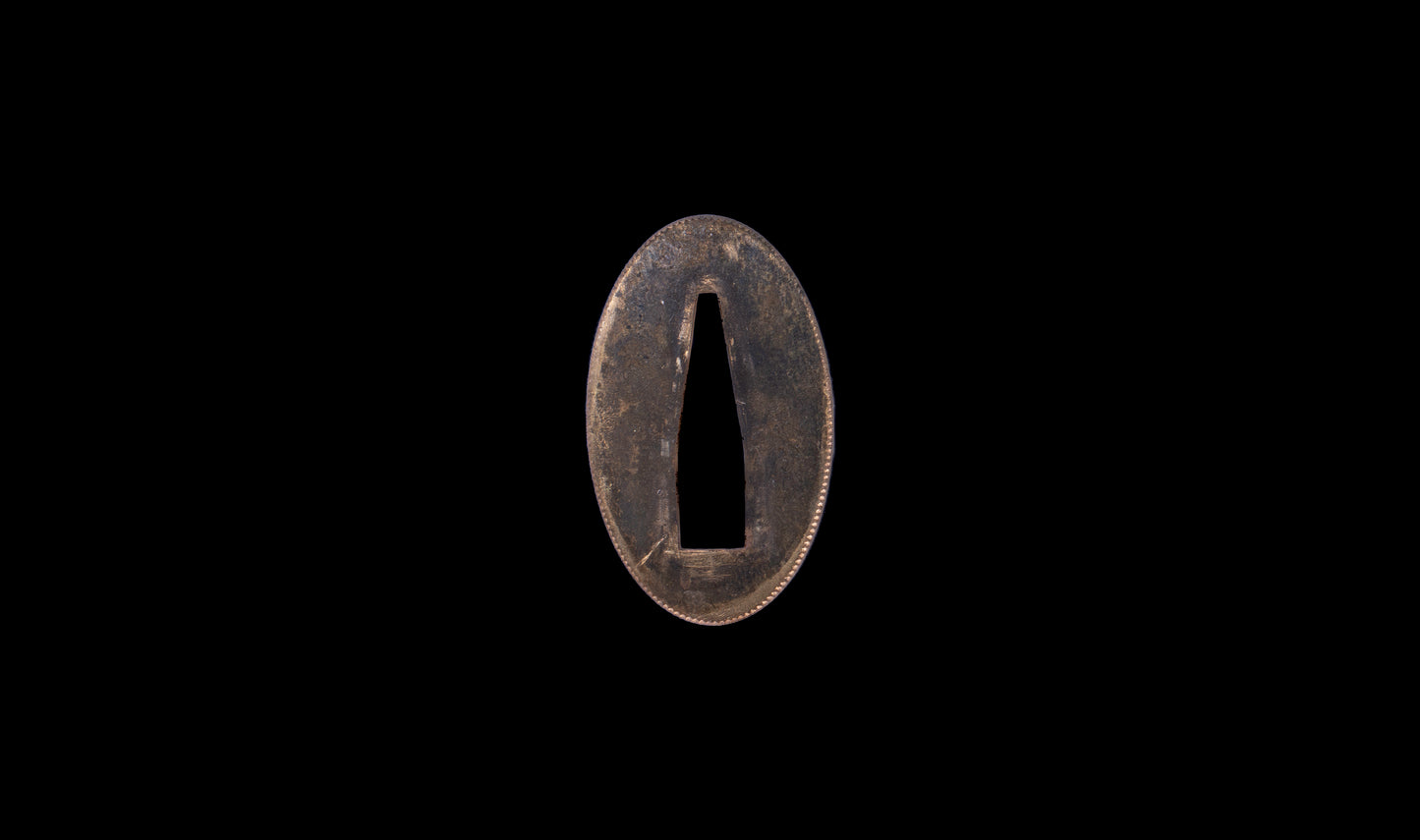
- Monture: Haute qualité nagoya-goshirae — saya en laque noire hiramaki-e or; fuchi-kashira shakudō motif dragon doré; menuki dragon doré; tsuba fer sukashi marugata géométrique; habaki argent niju; shirasaya inclus
- Longueur de lame (Nagasa): 63,5 cm (2 shaku 1 sun faible)
- Courbure (Sori): 1,5 cm
- Mekugi-ana: 1
- Forme: Shinogi-zukuri, ko-kissaki
- Motohaba: 3,01 cm / Sakihaba: 2,03 cm
- Motokasane: 5,88 mm / Sakikasane: 4,60 mm
- Poids de lame (nue): 572 g / Longueur totale koshirae: 101,8 cm
- Hamon: Ko-notare avec éléments gunome, nie actif le long de la habuchi
- Boshi: Ko-maru avec retour composé dans un ko-kissaki compact
- État: Poli il y a environ 60 ans; légère usure de surface; dans l'ensemble relativement sain. Accompagné d'un habaki argent et d'une shirasaya.
Ce distinguished Katana est une œuvre signée par Hiromasa (博正) de Hōjō dans la Province d'Iyo — l'un des maîtres forgerons les plus talentueux et tragiquement éphémères de l'ère Shōwa, dont l'expertise dans la tradition Bizen et la production relativement restreinte de lames survivantes confèrent à chacune de ses épées une rareté et une importance exceptionnelles pour les collectionneurs. Mesurant 63,5 cm avec un sori raffiné de 1,5 cm, la lame présente une forme shinoji-zukuri bien proportionnée avec un ko-kissaki composé d'une pureté classique. Le motohaba relativement large de 3,01 cm s'effile avec une autorité élégante jusqu'à un sakihaba de 2,03 cm, la géométrie dans son ensemble informée par l'engagement profond de Hiromasa avec les grands chefs-d'œuvre Bizen de la période Kamakura qui ont défini sa vision artistique.
Le hamon est accompli et confiant — un gently undulating ko-notare avec des éléments gunome intégrés se déplaçant le long de la habuchi avec une régularité rythmique, la ligne de démarcation animée par un nie fin qui capte la lumière en constellations changeantes. Le ji bien forgé et sombre fournit un fond idéal, son grain serré consistent sur toute la longueur de la lame. Le kissaki est compact et précisément formé — un ko-kissaki net avec une fukura nette — le boshi se tournant vers l'arrière dans un ko-maru composé qui témoigne de la main contrôlée et érudite à l'œuvre dans cette lame.
Le single mekugi-ana et le yasurime diagonal clair sur le nakago bien préservé sont cohérents avec les œuvres documentées de Hiromasa. La signature 豫州北条住博正作 est gravée avec des traits confiants et lisibles — l'inscription d'un artisan fier de sa province, de son maître et de son nom. Un habaki argent de haute qualité accompagne la lame, ainsi qu'une shirasaya pour un stockage à long terme approprié.
Détails Koshirae: Nagoya-Goshirae
La koshirae accompagnant cette lame appartient à la prestigieuse tradition nagoya-goshirae (名古拵え) — le style de monture prestigieux associé au plus haut niveau de présentation samouraï, enregistré dans la documentation originale comme kōkyū nagoya-goshirae sakaeru deki migoto (高級名古拵え栄える出来見事): « un exemple splendide de monture Nagoya haut de gamme dans toute sa fleur », de la collection d'une famille distinguée (meika). Chaque composant a été sélectionné et exécuté pour honorer une lame de mérite reconnu.
Le saya retient immédiatement l'attention. Laqué en noir profond et lustré urushi, sa surface est ornée de or hiramaki-e — la technique célébrée dans laquelle l'or en poudre est travaillé dans les couches de laque humide pour créer des formes décoratives qui semblent briller de l'intérieur de la surface elle-même. Des grappes de fleurs en or dispersées — chacune composée de pétales qui se chevauchent à différentes échelles — flottent sur le fond noir de minuit avec une chaleur qui se décale à mesure que la laque capte la lumière. C'est un travail de laque conçu comme une déclaration artistique indépendante, entièrement cohérent avec la plus fine production makie de la période Edo.
Le tsuba est une œuvre de fer sukashi géométrique audacieux sous la forme marugata (ronde). Un losange central se connecte via quatre bras rayonnants à quatre grandes ouvertures ovales arrangées symétriquement autour du périmètre, créant une composition en roue d'un pouvoir graphique frappant. La surface du fer lisse et profondément patinée et la précision de l'ajour parlent d'un spécialiste tsubashi à l'apogée de son art — un design simultanément enraciné dans la forme classique et frappant de modernité dans sa confiance compositionnelle.
Le set fuchi-kashira présente un vigoureux motif dragon dans des nuages tourbillonnants (ryū-zu) en shakudō sombre avec argent et doré. Le dragon kashira est profondément gravé en relief audacieux — écailles, griffes et expression féroce travaillées avec le ciseau confiant d'un artisan kinko compétent, les formes de nuages balayant dynamiquement autour de la figure. Le fuchi poursuit le programme avec des éléments roulants et des ponctuations en or. Les menuki soutiennent l'iconographie du dragon dans des figures jumelées shakudō et dorées. Le tsuka-ito est enveloppé dans la soie ambrée-or vieillie sur le same (peau de raie) blanc dans la tresse hishi-maki classique — sa teinte en miel chaud créant un dialogue chromatique sophistiqué avec les fittings sombres et l'or brillant de la laque saya.
Biographie du maître forgeron: Toriū Kamesabu / Hiromasa
Hiromasa (博正), dont le nom civil complet était Toriū Kamesabu (鳥生亀松), est né et a résidé à Hōjō-chō, Onsen-gun, Province d'Iyo — actuelle Préfecture d'Ehime sur l'île de Shikoku. Il a étudié sous Takahashi Yoshimune, acquérant par cette lignée distinguée une maîtrise de Bizen-den qui définirait toute sa carrière et sa réputation. Sa spécialité au sein de cette tradition était le hamon chōji-midare — le tempérage exubérant en motif de clou de girofle le plus étroitement associé à la grande école Ichimonji de la période Kamakura — et ses œuvres Ichimonji-utsushi lui ont valu la reconnaissance comme l'un des maîtres les plus importants de l'ère Shōwa dans ce genre exigeant.
Nommé maître forgeron commissionné par l'Armée impériale (gen rikugun jusei tōkō), Hiromasa s'est distingué même au sein de ce groupe sélect comme un artisan d'une capacité technique exceptionnelle — ses épées remarquées particulièrement pour leur convenance pour tameshigiri (test de coupe), une marque d'excellence pratique aussi bien qu'esthétique. Il a été récipiendaire du Prix du Premier ministre (Sōri Daijin-shō) et de nombreux autres prix, et était largement considéré comme l'une des figures les plus prometteuses de sa génération.
En Shōwa 28 (1953), Toriū Kamesabu est décédé à l'âge de quarante-cinq ans. Sa mort précoce a laissé son corpus d'œuvres comparativement petit — une circonstance qui aujourd'hui confère à chaque lame signée survivante une rareté exceptionnelle. Il était, comme l'ont noté ses contemporains, un maître forgeron de qui on attendait de grandes choses; ce qu'il a laissé est plus que suffisant pour confirmer que cette attente était pleinement justifiée.
Contexte historique : Bizen-den et la tradition Ichimonji
L'école Ichimonji de la province de Bizen, active principalement pendant la période de Kamakura (1185–1333), a produit ce que beaucoup de connaisseurs considèrent comme le plus beau hamon de toute l'histoire du sabre japonais. Leur caractéristique chōji-midare — des lobes en forme de clou de girofle exubérants s'élevant en profusion du yakigashira, imbibés de nioi et animés par ashi et sunagashi — représente l'expression suprême de la trempe différentielle Bizen-den. Les plus beaux travaux Ichimonji, conservés aujourd'hui comme trésors nationaux et biens culturels importants, ont servi de repère ultime aux forgerons de la tradition Bizen au cours de tous les siècles suivants.
L'Ichimonji-utsushi — évocation fidèle de ces grands originaux — compte parmi les défis les plus exigeants de la fabrication de sabres japonais. Recréer l'exubérance organique du véritable chōji de Kamakura nécessite non seulement une compétence technique mais une compréhension intuitive profonde de l'esthétique originale. Les forgerons qui ont réussi véritablement dans ce genre sont peu nombreux dans l'ensemble de l'histoire de la fabrication de sabres japonais, et la reconnaissance de Hiromasa comme l'un des praticiens les plus éminents de l'ère Shōwa le place dans une compagnie exceptionnelle. Acquérir un Hiromasa documenté, c'est acquérir un morceau de l'un des héritages interrompus les plus poignants de l'ère Shōwa — l'œuvre d'un maître à ou près de son apogée créatif, fixée dans le temps par un sort que le monde du sabre japonais n'a jamais cessé de pleurer.


Contenu réductible
Payment
You can pay by Bank card or Bank transfer. If you wish to use bank transfer please contact us using the form bellow with the name of the sword you are willing to buy.
Customs and Taxes
・Import duties, taxes and charges are not included in the item price or shipping charges. These charges are the buyer’s responsibility.
・Please check with your country’s customs office to determine what these additional costs will be prior to bidding/buying.
・These charges are normally collected by the delivering freight (shipping) company or when you pick the item up - do not confuse them for additional shipping charges.
Shipping and Return
- Swords are shipped from Tokyo, Japan. We manage all the procedures to export the sword.
- You can't return sword to Japan because procedures are too strict.
- We work with a shipping company that have experience with Nihonto so you don't have to worry.
- Please check the rules of your country before importing the sword. We do not take any responsibility, including (not limited to) refund, due to the above reasons.
- We can NOT cancel an order once, we already applied for the export authorization. As this document is made to customer name.
We have shipped authentic Japanese swords to the USA, UK, Canada, Mexico, Germany, France, Hong Kong, and Australia. If you don’t live in these countries and like to order, please contact us first before purchasing. We normally ship by EMS (Express Mail Service) provided by Japan Post.
If you live in the UK, please contact us BEFORE order.
Export Procedure (We manage it)
・All our swords are registered in the Agency for Cultural Affairs as artwork and The Board of Education(Cultural properties protection Committee); therefore each sword has the registration card, issued by the Board of Education.
・After receiving the full payment of the items,we return the registration card and get the permission from Ministry of Cultural Affairs to export the swords legally from Japan. It will take about 1 to 3 months for that step.
・After the receiving the permission, we will inform you by email and send the items immediately.
Contact form
What Our Collectors Say
Independent reviews from verified buyers on Trustpilot
Wonderful folks to buy from
“Large selection to choose from. The katana were signed with Hozon and the blades in a shirasaya. My two katana and Kozuka came packed in a solid wooden crate. Great friendly communication.”
Got a beautiful sword delivered to NYC
“Condition is just as pictured. Took a little while to get all the way to the states, but I was very happy with this seller and plan to purchase more from them.”
Order with confidence
“In the end I received what I ordered, well-packaged and in the condition specified.”
Un katana antique magnifique
“J'ai posé beaucoup de questions au support qui a su répondre et m'aider dans mon choix. La commande est arrivée avec le certificat dans un emballage robuste et en parfait état, il est vraiment magnifique !”